
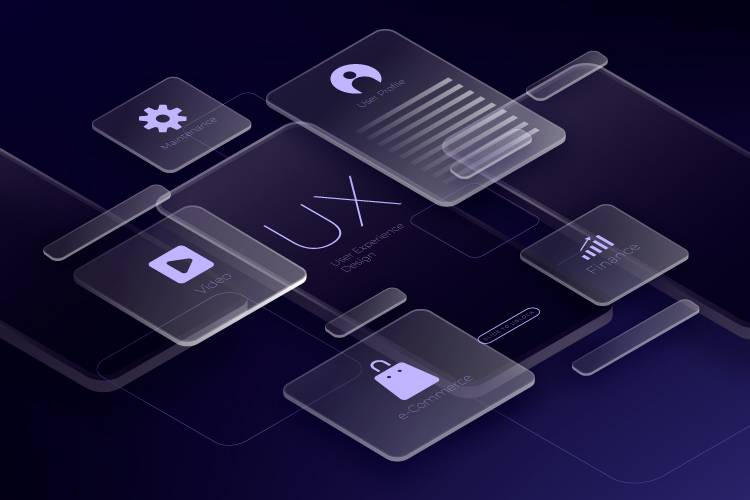
With the changing technology comes the expectation of users having to interact with the technology in their day-to-day activities. The year 2026 is a significant change in how designers consider the user interfaces and experiences. Mobile applications, websites, and smart gadgets are no longer evaluated based on the beauty of their appearance; users require smooth operation, individual experience, and convenience that support each of them. The UI/UX is changing more rapidly than ever due to innovations in augmented reality (AR), virtual reality (VR), artificial intelligence (AI), and smart wearables sectors. It takes more knowledge of human behavior, emotional attachment, and digital inclusivity to design for the future.
Minimalism Evolves: Clear Design with Deeper Meaning
The principle exceeds simplicity, and in 2026, minimalist design has been ruling the years. Designers understand that a clean interface need not be hidden; it should be made visible. Rather than deprivation of the visual features in favor of appearing modern, the choices in UI are based on clarity: the user must feel assured and instructed in every detail of the process.
Precise typography, spaciousness, and orderly design must be used; however, the focus has changed to intentional simplicity. Actions are significant here, which are micro-interactions. There are subtle animations that react to touch, scroll or hover, which give the user immediate feedback, making them feel like they are engaged with the system. This will help the cognitive comfort, which is the less one has to think to use a digital product, the better the cognitive comfort levels of the user are. The radical minimalism trend, which was formerly disparaged as sterile, has been coming more alive and human.
Hyper-Personalization: Interfaces That Adapt to Each User
Personalization has ceased to be a bonus functionality and has become the basis of contemporary UI/UX. The current users’ demand experiences are characterized by their personal needs, preferences, and behavior. As machine learning progresses, user interfaces can change according tothe situation: What does this user like? At what time of day do they work? What are their goals? These behavioral signals are employed by design systems to customize content, layout, structure, and interaction paths dynamically. Applications are not static anymore: instead of showing the same UI to all users, they can dynamically evolve:
- The content is reorganized according to the most clicked.
- Recommendations vary on the basis of past activities.
- Navigation shortcuts are displayed on popular features.
This makes the interface look more relevant and gives a more emotional touch to the user. Nevertheless, the process of personalization should never violate privacy and data ethics – transparency and user approval are critical security measures.
Emerging Standards in Accessibility and Inclusive Design:
In 2026, the concept of accessibility ceased being a checklist point or a legal mandate – it is a fundamental experience principle. The designers have realized that accessibility has some positive effects on all people, including those without disabilities. Elements such as high-contrast themes, text scaling, closed captions, and voice interactions make it more comfortable for the general audience as well as accommodate users with various visual, auditory, and physical challenges. Laws in various locations have now been broadened to include inclusive design on all significant digital products, which prompts UX teams to reconsider their processes. The testing of accessibility is placed among all the design sprints instead of being placed at the end.
The device such as AI-based simulations of screen readers and automated usability testing can be used to identify areas of concern earlier. Emotional availability is becoming significant too. Interfaces have been designed to accommodate neurodiverse users with too few things that can overwhelm them, decreased cognitive load, and predictable patterns of interaction. The future of UI/UX is made to suit all types of minds, not only that of the average mind.
Immersive Experiences: AR and VR Become Mainstream UX Tools
The development of AR and VR technologies has opened up an absolute world of new dimensions in design. The immersive interfaces are no longer restricted to games in 2026, the interface is influencing retail, education, health, and work inter-relationship. AR is the digitization of information that is superimposed on the real world and allows users to communicate with apps in their daily activities. There is interaction in the shopping experience; the customer is able to visualize the furniture in his or her home before he or she buys it. The navigation applications show real-time routes on the sidewalks. Through educational tools, 3D models are introduced into the learning environment of students, and they make learning discoveries.
Virtual reality is turning into a training, remote working, and socializing platform. The skill set to design for VR is a totally different spatial interaction, motion sensitivity, depth cues, and gesture controls that are intuitive and replace the touchscreen behavior. The designer of 2026 has to be cross-disciplinary: a storyteller, an animator, and a usability engineer.
Immersion presents difficulty, as well. The environments that are overstimulating may cause discomfort, particularly in first time users. The key to the future of immersive UX will be balance, or experiences that are both magical and at the same time, effortless, accessible, and comfortable to touch.
Voice, Gesture, and Touchless Interaction:
The trend of moving to hands-free interfaces is not slowing down. Home appliances, vehicles, and wearable gadgets are ushering in emerging UX designs where people turn to voice recognition or physical gestures instead of touching screens. The processing of natural language has advanced to the extent that voice commands can be conversational and very adaptive. Gesture-based design is slowly growing with motion sensors and haptic feedback. This multi-modal form of interaction acknowledges that users are frequently multi-tasking in driving, cooking, exercising, or walking. Interfaces in the future should be able to react with ease to various situations without the need to receive visual attention. To designers, this changes the UI work into the way conversations and behaviors are shaped rather than buttons and icons alone.
Data-Driven Design and Ethical Responsibility:
All UX decisions made in the present-day are affected by analytics – heat maps, A/B tests, session recordings, and sentiment scores. Data can assist teams to not only know what users are doing but also why they are doing it. In 2026, the move towards data-oriented design promotes constant enhancements: products will improve as users act, as opposed to extended intervals between product redesigns. Ethical responsibility is, however, of great concern as personalization and analytics get deeper. The designers should avoid manipulative patterns, honor user autonomy, and avoid dark UX practices, which deceive people into doing something they do not want to do. The element of trust has become a very important element of user experience. The most effective products are those that process data in a transparent manner, safeguard privacy, and prioritize the well-being of the user in each and every decision.
Future-Ready Design Systems: Flexible, Scalable, Consistent
UI needs to be flexible as digital platforms are rolled out on more devices, such as smartphones, foldables, TVs, AR glasses, and smart car dashboards. The 2026 design systems are made by components which get fluidly larger in size, shape, and complexity. These systems are consistent and can be customized to many settings. The UX teams do not design individual experiences per screen but rather design modular systems that are usable in any location. The method accelerates growth, enhances brand awareness, and ensures accessibility criteria among ecosystems. The outcome is a cohesive experience that becomes familiar regardless of the way the user handles it.
Conclusion: Designing With the Human Future in Mind
The UI/UX state of 2026 is based on a radical transformation: technology becomes less technical, more human, and can be considered emotionally sensitive. Interfaces are not fixed screens anymore – it is a dynamic environment, which follows a user through their day-to-day life. Design needs empathy, creativity, and multidisciplinary thinking in the future. Designers have to know psychology as well as they know images and code. They need to anticipate not only user clicks, but also their emotions, studies, and social interactions as well. With the continuous growth of AR, VR, AI, and new devices, the most successful experiences will be the ones that will enable users but not overwhelm them. The future of designing is not a pursuit, but a move towards creating digital realms that are accessible, intelligent, and genuinely human-centric in 2026. The future of UI/UX lies with those who design outside the screens and think outside the box.
Designing Tomorrow’s Digital Experiences, Today
We help businesses turn forward-thinking ideas into intuitive, accessible, and immersive digital products. From UI/UX strategy to full-scale web and software development, our team builds future-ready solutions that don’t just look good—but perform exceptionally in the real world.
Got time? Explore more!

Building Accessible Mobile Apps WCAG 2.2 Compliance in Flutter and React Native
Developer implementing WCAG 2.2 accessibility features in Flutter and React Native mobile applications for inclusive user experience.

AI-Powered Code Review: How DevOps Teams Are Achieving 40% Faster Release Cycles
DevOps team collaboration with development and operations integration for faster software release cycles

The Complete Guide to Conversion Rate Optimization for Pakistani E-Commerce Businesses
CRO strategy for Pakistani e-commerce website conversions