
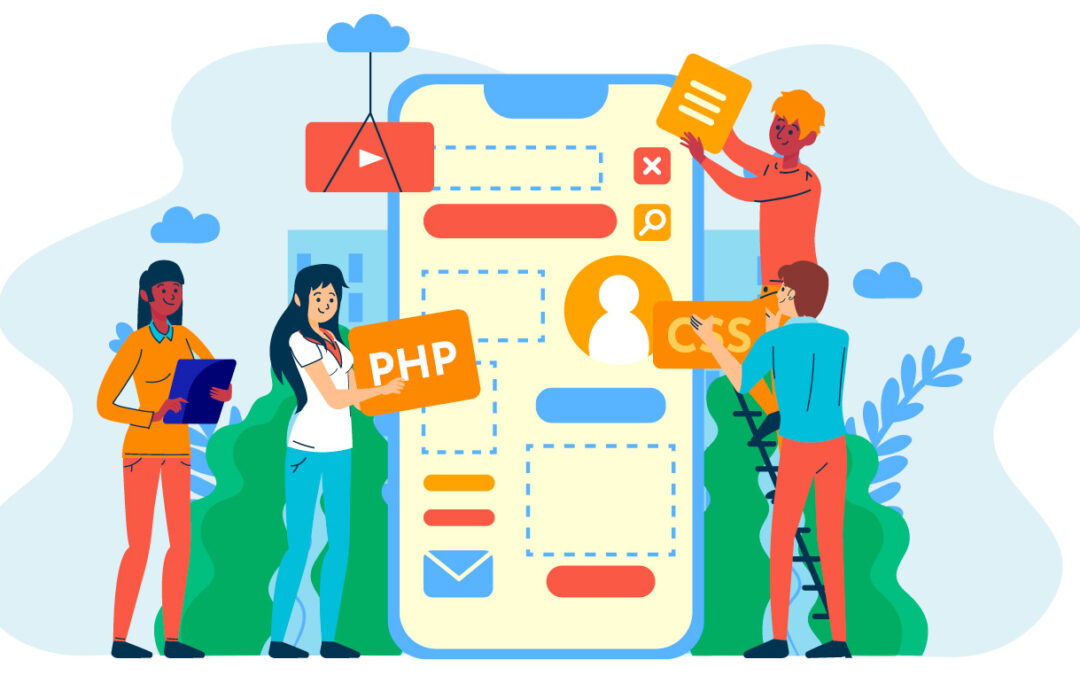
Mobile apps have turned out to be vital communication, business, learning, and entertainment resources. Nevertheless, the accessibility features enable millions of users around the world to engage in interaction with digital products because of visual, hearing, motor, or cognitive disabilities. Three-quarters of the mobile applications can no longer be considered a sort of luxury, but a mandatory component of contemporary software development. Accessibility makes digital products accessible to all people, irrespective of their capabilities. The best-known and most widely known guidelines on accessibility are those offered by the World Wide Web Consortium in Web Content Accessibility Guidelines. The newest alternative, WCAG 2.2, offers new guidelines that enhance usability among individuals with cognitive disabilities, low vision, and minimal motor control. To developers who develop cross-platform applications such as Flutter and React Native, accessibility features are important to develop an inclusive mobile application and reach more people in the market. This handbook will cover how to adopt the best practices concerning accessibility, along with compliance with WCAG 2.2 and enhancement of user experience in general.
Why Accessibility Matters in Mobile App Development:
Practicability is helpful to both end users and the business. Based on world accessibility research, more than one billion individuals across the globe are living with some kind of disability. Unless mobile applications are made accessible, they lock out a large number of their potential users. In addition to the ethical aspects, accessibility to a large number of countries is also becoming a legal imperative in most of them. To be in accordance with WCAG standards, governments and organizations now need digital services in order to make them equally accessible to all the users. Lack of compliance with the guidelines of accessibility may entail the threat of lawsuits, negative reputation, and the loss of clients. The usability is also enhanced by an accessible design to all. The applications become easier to use in demanding environments because they have better contrast, large touch targets, and voice navigation, which may include bright sunlight and users who are multitasking.
Understanding WCAG 2.2 Accessibility Principles:
The accessibility standards of WCAG are grounded on four basic principles referred to as POUR:
Perceivable: The users should be capable of perceiving the material either visually or auditory or with the help of Assistive Technologies.
Operable: The interface should enable all users to navigate through it with the various input mechanisms.
Self-explanatory: The interface and navigation have to be simple to understand.
Sturdy: The content should be compatible with the existing and upcoming assistive technologies.
In WCAG 2.2, these principles are further elaborated to cover more rules about focus, drag-and-drop, and touch interface target sizes, especially where mobile applications are concerned.
Implementing Screen Reader Compatibility:
Screen readers are materials that are necessary to users with visual impairments. These assistive technologies read the content on the screen and create it as spoken feedback or a piece of braille. Popular screen readers on mobile devices are iOS VoiceOver and Android TalkBack. To have compatibility with these tools, the developers should offer descriptive labels and semantic data to interface elements.
Accessibility in Flutter:
Flutter Semantics widget helps developers to provide accessibility labels and hints. This makes sure that the screen readers read the UI elements like buttons, forms and images properly. Such examples as giving icons semantic descriptions, labeling form fields, and ensuring logical groupings of elements in the navigation can be given as examples of improvements.
Accessibility in React Native:
React Native offers properties of accessibility (accessibilityLabel, accessibilityHint, accessible attributes). These properties assist the screen readers to describe the users with the UI components. It is necessary to make sure that every element of the interaction is labeled with a contextual meaning so that the users can navigate their way in the app without any visual clues.
Color Contrast and Visual Accessibility:
This is essential to users with poor eyesight or those who are color blind. The WCAG standards provide the minimum contrast ratios of text color and background color to be used in order to ensure readability. In the case of standard text, the suggested contrast ratio is 4.5:1, but large font should have at least 3:1 contrast. Designers must not use color as a one-dimensional medium of passing crucial information. Flutter and React Native applications allow developers to enhance the contrast through the use of available color palettes, and contrast analysis tools are also available. Contrast is used correctly to enhance readability to the users with disabilities and also to the users in the bright environment conditions.
Touch Target Size and Mobile Usability:
Touch-friendly interfaces are very important for mobile accessibility. Little or closely spaced buttons may be a problem for users with limited motor control. WCAG 2.2 suggests that the size of a touch target must be at least 44 × 44 pixels. Bigger touch targets enable the user to avoid frustration when tapping the buttons. Developers are to make sure that there is enough space between interactive objects and that critical actions are not too close to each other. This is a solution to prevent unintended taps, and the overall user experience is increased.
Supporting Keyboard Navigation:
Though mobile devices mostly use touch input, most users are using external keyboards or other assistive technologies to navigate. Accessibility can be enhanced by ensuring that the keyboards are well supported. It should provide the ability to use logical focus order to navigate the elements of the interface with the help of apps. Focus indicators should be visible in order to highlight to the users which element is in focus, and which one is not. Both Flutter and react native have focus management systems which enable developers to establish keyboards navigation routes. This is especially necessary to users that are not able to use touch gestures.
Accessibility Testing Tools:
It is necessary to test accessibility features in order to make sure that they meet the requirements of WCAG guidelines. During the development process, several tools can assist the developers in identifying the problems related to accessibility. Inbuilt device method Mobile accessibility testing may be carried out by using the inbuilt device applications like VoiceOver on iOS and Talkback on Android. These screen readers should be used by developers to navigate the app manually to ensure that the content of the app is read properly. Accessibility compliance can also be tested on automated testing tools. These tools are able to identify the lack of labels, the lack of contrasting ratio, and mismanaged focus. The testing during the development of the lifecycle will help avoid access problems into production.
Legal and Compliance Considerations:
In most countries, accessibility compliance is now becoming legal. Such laws as the Americans with Disabilities Act (ADA) and European directives on accessibility require digital services to be accessible to individuals with disabilities. The global standards of digital accessibility compliance are generally considered to be WCAG guidelines, although the particular requirements imposed by the law can differ depending on the region. The development of mobile apps should incorporate accessibility in the development processes of organizations that develop the apps. Retrofitting late accessibility may prove costly and time consuming.
Market Expansion Through Accessible Design:
Available cell phone applications are available to more people. Inclusive designs will enable businesses to provide services to users with assistive technologies and to people with temporary impairments. To illustrate, voice navigation might temporarily be used by a user with a broken arm whereas a user using a phone when in broad daylight has the advantage of having high contrast text. The ease of design also enhances customer satisfaction, retention, and brand image. Organizations that embrace inclusiveness are socially responsible and are trusted by the different groups of users.
Accessibility as a Core UX Strategy:
Good user experience design is closely associated with accessibility. Those features that aid users with disabilities usually enhance usability to all. There are clear navigation, readable text, repeatable layout, and responsive controls, that makes ease of use in applications irrespective of ability. When designing and developing products that are more accessible, it makes them more intuitive and user-friendly terms of design. This strategy is the closest to the principles of accessibility combined with the rest of the UX principles, as it means that apps are not only standard-compliant but fun to use.
Best Practices for Development Teams:
Accessibility implementation is an effective process that involves cooperation among the designers, developers, and quality assurance groups. Designers must develop layouts and colorings that are reachable. The developers need to involve semantic structure and assistive technology support. Accessibility testing of the application should also be done by QA teams during the cycle of development. Accessibility guidelines could be trained by team members and accessibility checks included in development pipelines would go a long way in enhancing compliance. Teams will automatically develop more inclusive products when the culture of accessibility is part of their development culture.
Conclusion:
The development of available mobile applications is an urgent task that needs to be performed by contemporary development teams. Adherence to WCAG 2.2 also provides the ability to enable individuals with varying capacities to use mobile apps as well as enhance usability to everyone.
Developers can make mobile experiences inclusive by supporting proper color contrast, creating touch-friendly interfaces, supporting keyboard navigation, and conducting extensive accessibility testing, as well as supporting screen reader support.
Such frameworks as Flutter and React Native allow creating cross-platform programs with high efficiency, yet accessibility has to be deliberately incorporated into each phase of the development. Once an accessibility gets on the agenda, the companies do not only comply with the law but also increase the reach of their market and provide more effective user experiences to all people.
WCAG 2.2 Compliance Guide for Flutter and React Native Developers
Learn how to build accessible mobile apps using WCAG 2.2 standards in Flutter and React Native. Improve usability with screen readers, contrast, and touch accessibility.
Got time? Explore more!

API-First Development:Building Scalable Backend Systems for Growing Startups
API-First Development:Building Scalable Backend Systems for Growing Startups
Growth is the name of the game in today’s rapidly changing digital economy, and startups need applications that grow, are flexible, and are scalable.

Leveraging Predictive Analytics:Turning Customer Data Into Revenue Growth
Digital analytics dashboard displaying charts, graphs, and performance metrics on a computer screen, representing business intelligence, predictive analytics, and data-driven decision-making.

AR Product Visualization in Mobile Apps: The Future of Online Shopping
Explore how AR product visualization is transforming e-commerce UX with immersive mobile shopping experiences, virtual try-ons, and interactive product previews.