
Introduction:
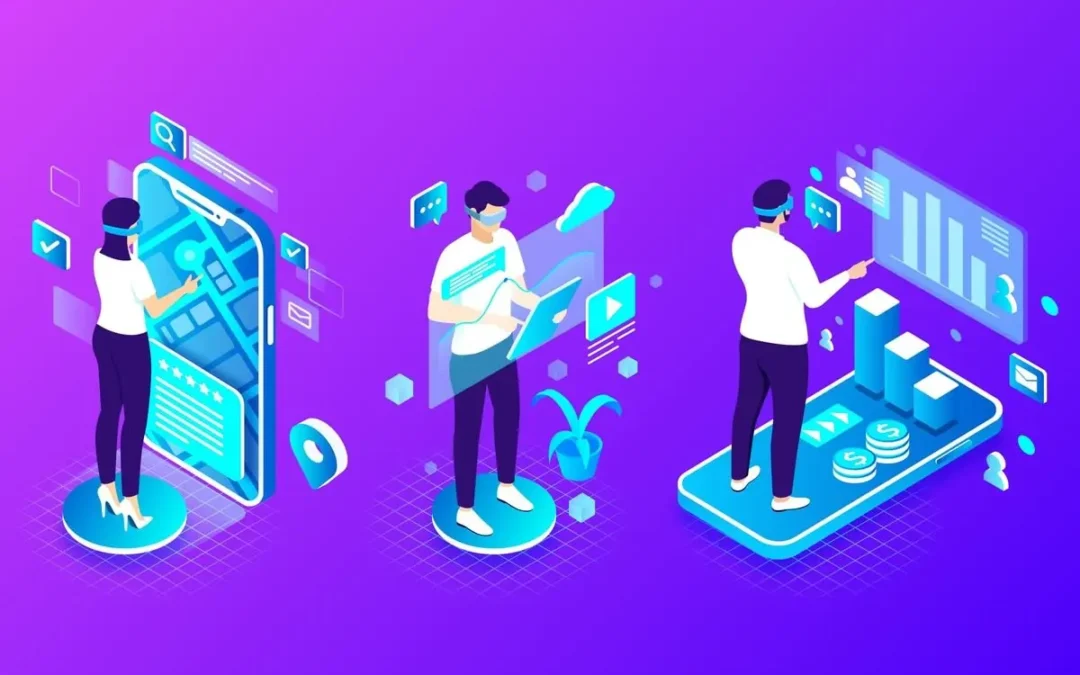
Web3 and Metaverse are interlinked to transform the visual word. These two technologies have been changing the interaction, working, and entertainment among the audience. With various tech converging technologies like Blockchain and decentralized networks, these two have been bringing a new wave in the digital world. Web Three and Metaverse Together are providing unending opportunities at personal and commercial levels.”.
The velocity of the web, from the static Web1 sites to the dynamic Web2 sites, has paved the path to an interactive and decentralized Web3. Meanwhile, the idea of the Metaverse, once a science fiction utopia, is increasingly becoming a reality with the capacity to change industries such as gaming, education, property, and social media. The understanding of Metaverse and Web Three is very important to understand how virtual experience is being modified and is changing the shape of human engagement with technology.
Understanding Web3:
With the integration of different technologies like decentralization, Blockchain, and user economy, web3 is leading the digital world. Web2 is powered by centrally run websites with a handful of companies controlling these. Web3 gives more authority to end-users over their identity, data, and digital identity. It relies on having:
- Blockchain Technology: Decentralized ledger technology that enables transparency, security, and trustless transactions. Contrary to the traditional systems with middlemen that own and confirm information, blockchain provides a peer-to-peer transaction that limits room for fraud and censorship.
- Smart Contracts: Computer programs that automate conditions to facilitate trustless and self-enforcing interactions. Smart contracts reduce the middleman, hence making transactions more affordable and faster.
- Decentralized Finance (DeFi): A finance system ran without the intermediation of the conventional banks, allowing direct peer-to-peer transactions. DeFi platforms enable lending, borrowing, and trading to individuals, providing them with more control over assets.
- Non-Fungible Tokens (NFTs): Digital tokens that authenticate ownership of rare virtual assets, i.e., virtual property, music, and art. Artists can sell their art conveniently with ownership and originality guaranteed through NFTs.
- Decentralized Autonomous Organizations (DAOs): Community platforms that are open for decentralized decision-making so that collective decision-making is done without a controller. DAOs would allow for people to contribute to creating and sustaining projects, and there is open inclusiveness and openness.
The biggest pro of Web3 is that it takes control out of the hands of companies and gives it to the users such that they are in control of their online self, possessions, and transactions. This brings the internet closer to being democratized and secured, with human beings not just consumers but producers of the system as well.
The Advent of the Metaverse:
People now are communicating virtually with the help of avatars by using the collaborative feature of Metaverse. There are various key aspects related to the matter, some of them are the following:
- Persistent and Shared Virtual Worlds: Metaverse has been given the feature of being constantly connected even when the users are offline which creates a digital society. Unlike other social networks, the matter is constructing a virtual world that evolves and exists in real-time.
- Interoperability: Metaverse also offers a smooth transfer among different platforms by using Blockchain protocols. Using Metaverse, the users can take NFTs or avatars and currencies as well from one Metaverse monarchy to another.
- Digital Economies: User-driven economies where individuals can buy, sell, and trade virtual goods, often facilitated by cryptocurrencies. Artists and businesses can profit from their content through the sales of virtual items, services, and experiences.
- Immersive Social Interactions: More successful communication and teamwork with realistic avatars and participatory virtual environments. The Metaverse allows users to work, socialize, and play together in patterns of interaction that replicate real-life activity.
Metaverse is not necessarily about gaming; it has massive business, health, learning, and even state applications. Companies are experimenting with virtual offices, virtual workplaces, and virtual property as a part of the Metaverse’s future reality.
Web3 and the Metaverse: A Symbiotic Relationship:
Web3 and Metaverse are complementary technologies that form a decentralized and user-centric digital space. Blockchain technology is the basis for secure transactions, digital ownership, and interoperability in the Metaverse. Some of the main intersections between these technologies are:
- Digital Ownership and Identity: Web3 facilitates verifiable digital identities and ownership via blockchain-based NFTs, enabling users to retain control over their assets and identities across different Metaverse platforms.
- Decentralized Governance: Metaverse has also provided the ability of decision-making to its users and how the virtual words should be developed. It has taken away the authority from a single company to control the vitamin verse and lets users shape and evolve the verse universe by voting or contributing their ideas. This has given a democratic and user-driven approach to building a digital environment.
- Monetization and Creator Economy: Metaverse has also taken away the middle man when it comes to earning from digital platforms. Now, the creators and developers can earn money from their contracts without dealing with any tech platforms or centralized marketplace. We have three has created an economy where individuals will have all control over their earnings. Metaverse has also given new opportunities to the creators by having virtual deserts, NFTs which were limited in the traditional gatekeeper system.
- Improved Privacy and Security: Web3 cryptographic security measures protect the user data from exploitation, rendering it less centralized, and privacy-oriented in character.
- Decentralized Marketplaces: Web3 marketplaces allow for buyers, sellers, and traders of virtual goods in the Metaverse to trade without centralized intermediaries.
Real-World Applications and Future Outlook:
- Education and Training: Simulation and virtual classrooms provide learning by experience, increasing access and participation. Universities and corporations are using VR and AR to train students and employees in simulated settings.
- Virtual Property: Virtual property ownership in Metaverse properties such as Decentraland and The Sandbox is presenting new investment options. Investors and corporates are purchasing virtual land for business and personal use.
- Retail and e-commerce: Brands are using virtual stores, NFT reward programs, and online shopping experiences to connect with consumers.
- Healthcare: Metaverse has also brought an evolution in the healthcare sector, by initiating ritual clinics that can help patients to remotely consult with doctors. It would also help the medical students to practice in a virtual environment.
- Corporate and Social Affairs: Corporates and institutions are leveraging the Metaverse to hold conferences, meetings, and networking events reducing physical travel and sustaining interactive communications.
Challenges and Considerations:
Despite their potential, a few challenges remain to be resolved for Web3 and the Metaverse to come to fruition:
- Scalability and Performance: Current blockchain and VR technology suffers from scalability issues that must be addressed in the hope of mainstream adoption.
- Regulatory Uncertainty: Governments continue to make up policies around virtual ownership, data protection, and cryptocurrency regulation.
- Security Risks: Cyber attacks, hacking, and breaches remain risks to users and developers.
- Digital Divide: Broadband internet, VR gear, and blockchain tech can create imbalances in adoption.
- Environmental Impact: VR and blockchain networks are energy-hungry, raising sustainability issues that must be addressed with green solutions.
Conclusion:
Web3 and the Metaverse are an innovation force of digital life that builds a decentralized, immersive, and user-oriented world. Their growth will extend new opportunities into different industries and change the method of human engagement, construction, and business practices in the digital world. Yes, there is a challenge in sight, but the potential of innovation and onboarding makes it an exciting proposition for the web’s future. As adoption grows, businesses, politicians, and coders must gather and work to build a moral, accessible, and secure cyber world for all.
“Why Web3 and the Metaverse Will Reshape the Digital World”
“From redefining digital ownership to creating immersive virtual economies, Web3 and the Metaverse are not just buzzwords—they’re revolutionizing how we interact, work, and build online.”
Got time? Explore more!
API-First Development:Building Scalable Backend Systems for Growing Startups
Growth is the name of the game in today’s rapidly changing digital economy, and startups need applications that grow, are flexible, and are scalable. These days, businesses are not confined to a single web application. Rather, they are responsible for managing mobile apps, web platforms, third-party integrations, cloud services and customer-facing APIs all at once. Typical backend development approaches are less effective in this scenario. That’s why API-first development has emerged as a successful strategy for startups to scale. API-first development is the practice of designing APIs before designing software. APIs are no longer add-ons, they are the backbone of the system architecture. This allows independent front end and back end work, while keeping everyone in the loop. APIs will become a major focus of startup development at the outset, thereby facilitating easier scalability, maintenance, and integration with future technologies. API-first architecture also enhances the development process by facilitating faster building times and helping to ensure that the businesses provide optimal user experience.

Understanding API-First Development:
API-first development is about designing the communication pattern first, and then writing the application. APIs are like contracts . They define how data and functions are shared between different systems . This helps to normalize all services, applications and integrations. Common application development models involve building backend systems first and then adding APIs later on as needed by the front-end applications. This can result in endpoint inconsistencies, documentation issues and problems with scalability. API-first development avoids these issues by designing the API from the beginning of the project. This is particularly helpful for startups, since a number of teams can work concurrently. Frontend developers can create interfaces with a mock API and backend engineers can create the actual services. The parallel workflow allows to shorten the development time and enhance team productivity.
Benefits of API-First Architecture:
One of the greatest benefits of API-first architecture is scalability. When startups expand, their applications will most frequently spread to a number of platforms including Android App, iOS App, Website, Smart Devices and Cloud Services. APIs are a standard communication layer that enable all these platforms to communicate with the same backend system. One of the other key advantages is flexibility. API-first systems simplify the process of connecting with third-party services like payment gateways, CRM platforms, analytics, and authentication providers. The new technologies are easy to integrate and don’t require rebuilding the back-end infrastructure of the business. API-first development also lets teams work better together. The API contracts describe how the system works so different team members can work on it without getting in each other’s way, such as designers, front end developers, back end engineers and QA testers. It avoids confusion and delays in development. Also, consistent APIs lead to consistency across apps. The structured data and user experience is the same whether accessed through the mobile app or web browser.
RESTful API Best Practices:
REST is still one of the most popular ways to build APIs because it is simple and scalable . There are some basic rules for RESTful APIs to enable efficient communication between systems. One of the important best practices is to have clear and meaningful names of resources. Endpoints should be a logical resource (for example /users, /products, /orders) It is easier to read the code and for developers to do the integration if the same name is used. Moreover, REST APIs should follow the correct usage of HTTP methods. GET method is used to fetch data , POST method is used to create new resources , PUT method is used to update the existing resources , DELETE method is used to delete resources . Following these standards can help ensure the API behaves consistently. One important practice is to return consistent json responses with the correct status. APIs should provide a clear, concise error message and a consistent response to facilitate problem identification. Also, if the data set is large, be sure to paginate it for performance and to keep server load down.
GraphQL and Modern API Development:
For applications that need flexible data retrieval, GraphQL has become a strong alternative to REST API, particularly in that regard. In contrast to REST, which has many endpoints, GraphQL has one endpoint into which clients “query” just the data they need. This way you’ll minimize over and under fetching of data. A mobile app, for instance, might only ask for certain product data rather than unwanted information. This boosts performance and consumes less bandwidth. The major advantage of GraphQL for the front-end dev is the increased control it allows him/her to have over the queries for the data. he flexible nature of GraphQL may prove beneficial for complex interface-based applications. However, there are several issues related to GraphQL. The technology might complicate caching, querying, and security aspects. If the data structure that users are requesting is deeply nested, the poorly designed GraphQL system can lead to performance problems. REST APIs are the better solution for many startups, and GraphQL the better solution when applications get more complex.
API Versioning Strategies:
APIs need to be updated once startups grow and new features and business demands are added. Any change may lead to the failure of old software if versioning is not used in case there are any modifications to the API because of its versioning, developers can implement their changes and remain compatible with older versions. URL versioning is one of the widely used techniques whereby a particular version is attached in the URL itself like “/api/v1/users” or “/api/v2/users”. This method can be understood easily. The other technique of API versioning is by including versions in the request headers. Adopting effective versioning strategies makes it easier to manage growth without causing hassles for users. They should also not make unessential breaking changes, and give developers time to upgrade to the newer versions of their API.
Documentation with OpenAPI and Swagger:
Documentation is key to a successful API-first development. Without good documentation, onboarding is slow, integration is prone to mistakes and there is confusion between development teams. OAS has become the industry standard for API documentation of REST APIs. It specifies endpoints, request parameters, the structure of the response, the authentication process, and what constitutes an error. Swagger is used for the generation of automatic interactive API documentation. Tests on the API endpoints can be done using the API documentation user interface itself, resulting in an effective integration process. The documentation proves useful for third-party software developers or business partners interested in integrating external software to your startup platform.
Authentication and API Security:
Another part of the development of backend systems that needs special attention is security. Many APIs work with confidential data that can be user details, financial information, credentials, and so on, which makes them very attractive to hackers and attackers. Among the most popular methods of implementing security for your application, you may try Token-based Authentication using JSON Web Tokens. After logging in to an application, the user receives a token with which he will later make requests to the API. Another solution, which is widely used in 3rd-party authentication, is OAuth 2.0. This solution allows your users to log in to your application using other websites like Google and Facebook without providing you with any passwords. Also, all communication between an API and a client should use HTTPS encryption.
Rate Limiting and Performance Management:
The backend systems will have to deal with problems related to managing increased traffic owing to increased numbers of users for the start-ups. The APIs may be abused, spammed and even subject to DoS attacks. Rate limiting involves restricting the number of requests that each user can submit within certain periods. For example, one API may allow 100 API calls within one minute for any one user. This measure reduces overloading of the system thus improving its stability. There are other ways such as caching to improve performance. API gateways and cloud platforms may come with native monitoring and performance optimization features that assist small businesses grow efficiently. Startups with plans to accommodate high user and third-party integration counts will be particularly interested in performance management.
Transitioning from Monoliths to Microservices:
Most startups develop their applications in monolithic fashion as it is easier to build and deploy them in the initial stage of their operations. But larger systems can present scalability and maintenance issues in monolithic systems. API-first architecture makes it easier to switch to microservices. In the microservices approach, there are small services dealing with various aspects of the business, including payments, authentication, inventory, and notifications. The services exchange the information via API. Each microservice can scale independently, which enhances deployment flexibility and fault isolation. Development teams can modify a single service without impacting the overall service. But, do not rush the transition to microservices as it adds complexity to the operations of the startups. It is best to phase in a gradual approach.
Conclusion:
The practice of API-first design has been established as a valuable approach in building scalable and future-ready backend solutions by startups. By focusing on building an API rather than implementing something, a startup can benefit through better collaboration, faster frontend development processes, and third party integration. There are multiple practices that help establish an ecosystem of APIs including principles behind RESTful design, GraphQL’s flexibility, documentation, authentication, rate limiting, and testing approaches. API-first design also helps a company progress further into microservice architecture as the business evolves. In the ever-growing digital world, it is clear that investments into powerful API architectures will help startups scale effectively, deliver smooth user experiences, and stay resilient.
Leveraging Predictive Analytics:Turning Customer Data Into Revenue Growth
Digital analytics dashboard displaying charts, graphs, and performance metrics on a computer screen, representing business intelligence, predictive analytics, and data-driven decision-making.

AR Product Visualization in Mobile Apps: The Future of Online Shopping
Explore how AR product visualization is transforming e-commerce UX with immersive mobile shopping experiences, virtual try-ons, and interactive product previews.


