
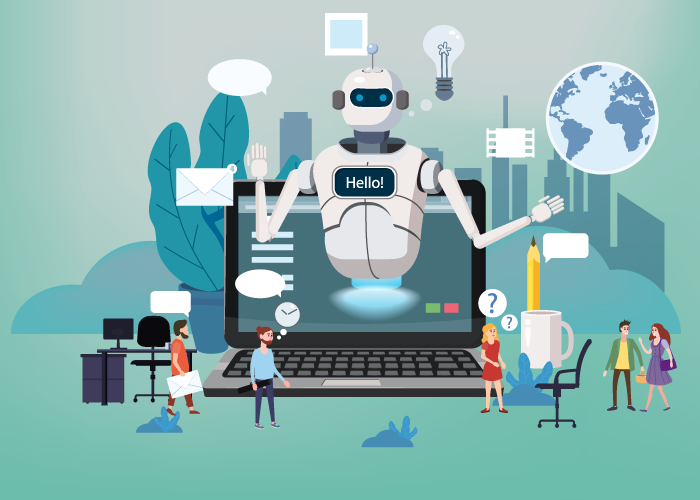
The development of generative AI has grown to be a fundamental aspect of software development in a very brief amount of time. One of the points where AI-assisted engineering will not be optional is 2026, which will be considered the basis of delivering in less time, achieving a higher level of quality, and making collaboration smarter. AI is being applied by developers worldwide to write code, identify bugs, test automatically, and even assist in making architectural decisions. Rather than substituting human inventiveness, AI is enhancing it, and software teams are creating overly dependable applications as never before.
The change is re-conceptualizing the software development life cycle (SDLC). Manual-intensive workflows that relieve manual effort are now complemented by AI models that are able to make suggestions in real-time, provide insightful information, and automate on every level. The outcome will be a new type of development environment where productivity is improved, the number of errors is reduced, and the teams will be able to pay more attention to innovation.
AI-Assisted Coding: From Autocomplete to Co-Development
Not too long ago, AI solutions could offer only basic autocomplete requests. These devices developed into completely interactive coding companions in 2026. Generative AI models are aware of programming logic, frameworks, and a real project. They are able to write full functions, create boilerplate skeleton and performance/security tune existing code. Developers would now start developing by stating intentions using natural language. The code is then written by the AI, and the developer reviews and amends, and instructs improvements. This joint venture accelerates implementation tremendously, particularly in repetitive or elaborate patterns. In the case of junior engineers, AI can be used as a guided learning tool that allows them to learn the best practices and minimize knowledge gaps. More to the point, AI can be used to ensure the consistency of large projects. It implies naming conventions, imposes patterns of architecture, and emphasizes non-conformity to the project standards. Rather than wasting time cleaning up the structure, developers can work on other aspects of the system and be able to resolve actual issues.
Automated Testing Becomes Intelligent and Predictive:
Testing is one of the SDLC phases that has always been time-consuming. Generative AI is changing this by automating the creation of tests and assisting the team in revealing the weaknesses earlier on. AI models are able to examine requirements and generate test cases to cover edge conditions and run them automatically in environments. This will be much more accurate, particularly in finding the weak points or performance bottlenecks. Predicting where bugs will occur before users see them, AI-driven tools detect bugs based on historical data on failure patterns and code by comparing these patterns. Maintenance testing is also faster.
Once a new update is applied to the codebase, AI is able to calculate which tests require rerunning to eliminate unneeded work. QA teams can peruse through prioritized results instead of sorting through thousands of test scripts, with root cause explanations. The end result is not only quality testing, but it is a smarter, more robust product.
Faster Debugging and Smarter Code Reviews:
The process of debugging has been said to be the most exhausting aspect of development. That burden is taken off in 2026 by AI tools. They recommend specific corrections based on the existing application logs, dependencies, and code history. Rather than having to manually trace lines of error, the developers are guided in reasoning and options for resolving errors. In a similar manner, real-time AI-promised feedback is added to the code reviews. The system brings out vulnerabilities in security, anti-patterns, and performance risks at an early stage, before the code is sent to the review stage. In the pull requests, the AI suggests ideas in context, why a code line is not working, how the code can be rewritten to run more efficiently, and should change should affect other modules. It minimizes the back-and-forth communication, shortens the review periods, and improves the quality of the code throughout the whole release process. The old senior engineers are now able to concentrate on the effects of strategic reviews and not syntax and formatting.
Collaboration Reinvented: Shared Intelligence Across Teams
Generative AI can boost teamwork by providing a knowledge-sharing platform that is open to all members of the team. Actionable insights can be summarized instantly in documentation, data models, architectural diagrams, and sprint histories. Team members can query the AI to get the correct knowledge about the project instead of spending time scrolling through long wiki pages or searching through old design files; thus, onboarding will become easier, and cross-functional collaboration will be much more convenient. The AI is considered a neutral communicator within distributed development setups. It assists in rewriting ambiguous requirements, documentation translation into other languages, and aligning the product objectives with the engineering decisions. Elements of miscommunication that could slow progress were previously detected and fixed automatically. Moreover, the developers in various time zones can leave the updates generated by AI to their colleagues, which means that the momentum will not be lost during the handoffs. The geographical limit, level of experience, and mode of communication do not restrict collaboration anymore — all people are equal in sharing the same level of intelligence.
Smarter Deployment and Continuous Improvement:
Continuous integration and delivery (CI/CD) pipelines are increasingly complex, and the use of AI introduces automation and accuracy to the deployment processes. It anticipates the operational risks, forecasts the deployment time, and suggests rollback plans in case a release can lead to instability. One more feature of generative AI is ongoing performance monitoring in case an application is already online. It identifies anomalies and proposes specific remedies through real-time analytics, which sometimes identify a problem even before a user realizes it. The system continues to enhance its monitoring intelligence by studying the behavior of the applications over time. This proactive mode makes the response quicker in case of an incident, enhances the uptime, and safeguards the trust of the users.
Empowering Creativity Instead of Replacing Humans:
One of the most widespread mistakes is that AI is supposed to substitute for developers. The reality in 2026 is the complete converse. Repetitive tasks and those that are error-prone are handled by AI to allow human talent to work on innovation. The developers use less time on boilerplate code, rewrite cycles, and manual research, and more time to create unique features, improve user experience, and address real-world problems. There is also experimentation in AI. Engineers are able to prototype fast, experiment with the architecture, and receive feedback in real time. Projects that used to be conceptualized over a period of months are now developed in the course of weeks. The process of development becomes more enjoyable, educational, and creatively satisfying.
Ethical and Security Considerations in AI-Driven Engineering:
Although generative AI helps to boost development, it also comes with new obligations. The teams have to attentively watch the usage of the sensitive data by models and make certain that the models follow the rules. Code generated by AI should be checked to eliminate potential undisclosed vulnerabilities or licensing issues. Man, control is necessary in all stages. To use it responsibly, there must be transparency; developers must know why the AI made some decisions, not to accept the answers blindly. To put it in brief, AI simplifies development, yet the professional judgment ensures its safety.
Conclusion: A Future Where Humans and AI Build Together
By the year 2026, AI will have completely transformed software development, implementation, and improvement. The development teams will work more quickly and with fewer mistakes, and the testing will be predictive, and the collaboration will run smoothly with common knowledge systems. The SDLC has grown smarter, automated, and user-friendly for the developer.
Software engineering is not about humans and machines, but the future of software engineering is about people with some power over machines. With generative AI, developers gain productivity and complexity reduction and are free to do what they best imagine, design, and create amazing digital experiences. Those firms that adopt such a change today will be the pioneers of the new era of innovation as they create a world where technology constantly changes with potential and not restrictions.
Building Smarter Software for an AI-Driven Future
We help businesses leverage modern technologies—like Generative AI—to build scalable, secure, and high-performance web and software solutions. From intelligent development workflows to custom applications, our team combines innovation with engineering excellence to deliver software that’s ready for what’s next.
Got time? Explore more!
API-First Development:Building Scalable Backend Systems for Growing Startups
Growth is the name of the game in today’s rapidly changing digital economy, and startups need applications that grow, are flexible, and are scalable. These days, businesses are not confined to a single web application. Rather, they are responsible for managing mobile apps, web platforms, third-party integrations, cloud services and customer-facing APIs all at once. Typical backend development approaches are less effective in this scenario. That’s why API-first development has emerged as a successful strategy for startups to scale. API-first development is the practice of designing APIs before designing software. APIs are no longer add-ons, they are the backbone of the system architecture. This allows independent front end and back end work, while keeping everyone in the loop. APIs will become a major focus of startup development at the outset, thereby facilitating easier scalability, maintenance, and integration with future technologies. API-first architecture also enhances the development process by facilitating faster building times and helping to ensure that the businesses provide optimal user experience.

Understanding API-First Development:
API-first development is about designing the communication pattern first, and then writing the application. APIs are like contracts . They define how data and functions are shared between different systems . This helps to normalize all services, applications and integrations. Common application development models involve building backend systems first and then adding APIs later on as needed by the front-end applications. This can result in endpoint inconsistencies, documentation issues and problems with scalability. API-first development avoids these issues by designing the API from the beginning of the project. This is particularly helpful for startups, since a number of teams can work concurrently. Frontend developers can create interfaces with a mock API and backend engineers can create the actual services. The parallel workflow allows to shorten the development time and enhance team productivity.
Benefits of API-First Architecture:
One of the greatest benefits of API-first architecture is scalability. When startups expand, their applications will most frequently spread to a number of platforms including Android App, iOS App, Website, Smart Devices and Cloud Services. APIs are a standard communication layer that enable all these platforms to communicate with the same backend system. One of the other key advantages is flexibility. API-first systems simplify the process of connecting with third-party services like payment gateways, CRM platforms, analytics, and authentication providers. The new technologies are easy to integrate and don’t require rebuilding the back-end infrastructure of the business. API-first development also lets teams work better together. The API contracts describe how the system works so different team members can work on it without getting in each other’s way, such as designers, front end developers, back end engineers and QA testers. It avoids confusion and delays in development. Also, consistent APIs lead to consistency across apps. The structured data and user experience is the same whether accessed through the mobile app or web browser.
RESTful API Best Practices:
REST is still one of the most popular ways to build APIs because it is simple and scalable . There are some basic rules for RESTful APIs to enable efficient communication between systems. One of the important best practices is to have clear and meaningful names of resources. Endpoints should be a logical resource (for example /users, /products, /orders) It is easier to read the code and for developers to do the integration if the same name is used. Moreover, REST APIs should follow the correct usage of HTTP methods. GET method is used to fetch data , POST method is used to create new resources , PUT method is used to update the existing resources , DELETE method is used to delete resources . Following these standards can help ensure the API behaves consistently. One important practice is to return consistent json responses with the correct status. APIs should provide a clear, concise error message and a consistent response to facilitate problem identification. Also, if the data set is large, be sure to paginate it for performance and to keep server load down.
GraphQL and Modern API Development:
For applications that need flexible data retrieval, GraphQL has become a strong alternative to REST API, particularly in that regard. In contrast to REST, which has many endpoints, GraphQL has one endpoint into which clients “query” just the data they need. This way you’ll minimize over and under fetching of data. A mobile app, for instance, might only ask for certain product data rather than unwanted information. This boosts performance and consumes less bandwidth. The major advantage of GraphQL for the front-end dev is the increased control it allows him/her to have over the queries for the data. he flexible nature of GraphQL may prove beneficial for complex interface-based applications. However, there are several issues related to GraphQL. The technology might complicate caching, querying, and security aspects. If the data structure that users are requesting is deeply nested, the poorly designed GraphQL system can lead to performance problems. REST APIs are the better solution for many startups, and GraphQL the better solution when applications get more complex.
API Versioning Strategies:
APIs need to be updated once startups grow and new features and business demands are added. Any change may lead to the failure of old software if versioning is not used in case there are any modifications to the API because of its versioning, developers can implement their changes and remain compatible with older versions. URL versioning is one of the widely used techniques whereby a particular version is attached in the URL itself like “/api/v1/users” or “/api/v2/users”. This method can be understood easily. The other technique of API versioning is by including versions in the request headers. Adopting effective versioning strategies makes it easier to manage growth without causing hassles for users. They should also not make unessential breaking changes, and give developers time to upgrade to the newer versions of their API.
Documentation with OpenAPI and Swagger:
Documentation is key to a successful API-first development. Without good documentation, onboarding is slow, integration is prone to mistakes and there is confusion between development teams. OAS has become the industry standard for API documentation of REST APIs. It specifies endpoints, request parameters, the structure of the response, the authentication process, and what constitutes an error. Swagger is used for the generation of automatic interactive API documentation. Tests on the API endpoints can be done using the API documentation user interface itself, resulting in an effective integration process. The documentation proves useful for third-party software developers or business partners interested in integrating external software to your startup platform.
Authentication and API Security:
Another part of the development of backend systems that needs special attention is security. Many APIs work with confidential data that can be user details, financial information, credentials, and so on, which makes them very attractive to hackers and attackers. Among the most popular methods of implementing security for your application, you may try Token-based Authentication using JSON Web Tokens. After logging in to an application, the user receives a token with which he will later make requests to the API. Another solution, which is widely used in 3rd-party authentication, is OAuth 2.0. This solution allows your users to log in to your application using other websites like Google and Facebook without providing you with any passwords. Also, all communication between an API and a client should use HTTPS encryption.
Rate Limiting and Performance Management:
The backend systems will have to deal with problems related to managing increased traffic owing to increased numbers of users for the start-ups. The APIs may be abused, spammed and even subject to DoS attacks. Rate limiting involves restricting the number of requests that each user can submit within certain periods. For example, one API may allow 100 API calls within one minute for any one user. This measure reduces overloading of the system thus improving its stability. There are other ways such as caching to improve performance. API gateways and cloud platforms may come with native monitoring and performance optimization features that assist small businesses grow efficiently. Startups with plans to accommodate high user and third-party integration counts will be particularly interested in performance management.
Transitioning from Monoliths to Microservices:
Most startups develop their applications in monolithic fashion as it is easier to build and deploy them in the initial stage of their operations. But larger systems can present scalability and maintenance issues in monolithic systems. API-first architecture makes it easier to switch to microservices. In the microservices approach, there are small services dealing with various aspects of the business, including payments, authentication, inventory, and notifications. The services exchange the information via API. Each microservice can scale independently, which enhances deployment flexibility and fault isolation. Development teams can modify a single service without impacting the overall service. But, do not rush the transition to microservices as it adds complexity to the operations of the startups. It is best to phase in a gradual approach.
Conclusion:
The practice of API-first design has been established as a valuable approach in building scalable and future-ready backend solutions by startups. By focusing on building an API rather than implementing something, a startup can benefit through better collaboration, faster frontend development processes, and third party integration. There are multiple practices that help establish an ecosystem of APIs including principles behind RESTful design, GraphQL’s flexibility, documentation, authentication, rate limiting, and testing approaches. API-first design also helps a company progress further into microservice architecture as the business evolves. In the ever-growing digital world, it is clear that investments into powerful API architectures will help startups scale effectively, deliver smooth user experiences, and stay resilient.
Leveraging Predictive Analytics:Turning Customer Data Into Revenue Growth
Digital analytics dashboard displaying charts, graphs, and performance metrics on a computer screen, representing business intelligence, predictive analytics, and data-driven decision-making.

AR Product Visualization in Mobile Apps: The Future of Online Shopping
Explore how AR product visualization is transforming e-commerce UX with immersive mobile shopping experiences, virtual try-ons, and interactive product previews.


