
+92-322-8723490 info@devraulic.com

What is CMS?

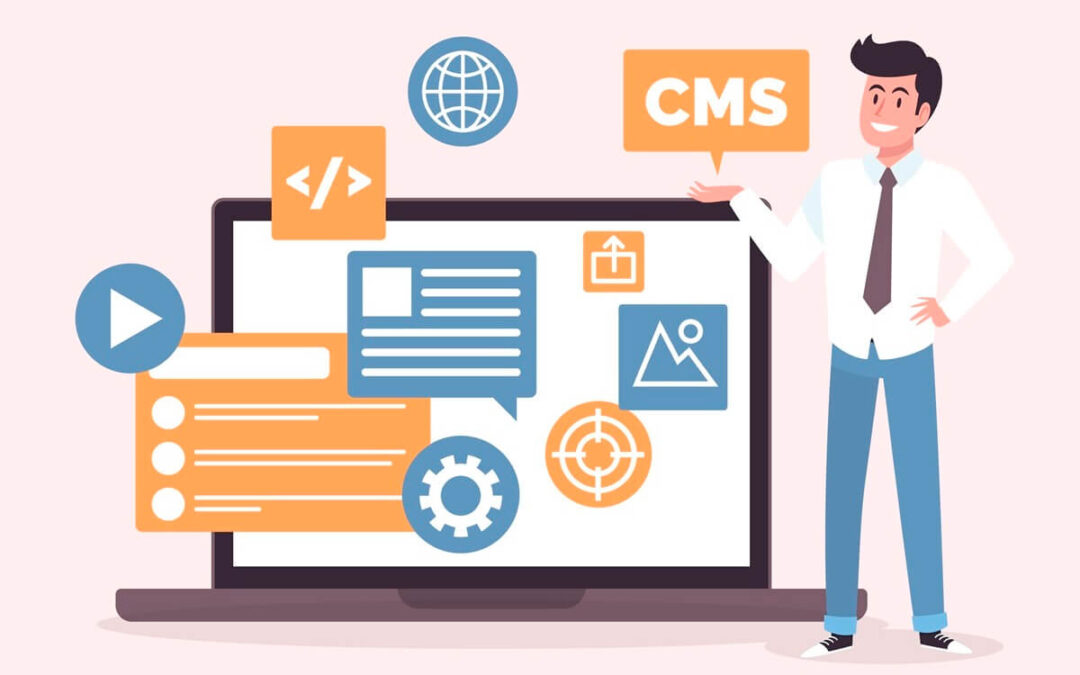
A software platform called a content management system (CMS) enables users to produce, organize, and disseminate digital content online. Websites, blogs, and e-commerce platforms frequently use content management systems (CMSs) to easily update and customize content without requiring complex technical knowledge.

What is headless CMS?

A content management system known as a “headless CMS” enables content producers to handle and produce content apart from the front-end presentation layer. This implies that content is not restricted to any one website or application and can be used and displayed across various platforms and devices.

What is Traditional CMS?

Traditional CMS, or CMSs, are web-based programs that don’t require technical expertise for users to create, manage, and publish digital content. Typical features include media management, user permissions, a WYSIWYG editor, media management, user permissions, and more.

Difference between traditional and headless CMS:

These systems work for specific purposes, which have an impact on their architecture, usability, and flexibility for developers.

Here we will discuss main differences that clearly define which one is best.

Headless content management systems:

  1. Content can be managed in one place. All of your content for all of your systems is managed through the same interface, allowing you to publish content faster and with fewer mistakes.
  2. A headless CMS’s ‘back-end’ is separate from the ‘front-end,’ which displays content.
  3. Create Omni channel experiences by easily distributing content across multiple platforms from a single backend.
  4. Scalable, easy to customize, and extremely versatile.
  5. Needs developers or developer support.
  6. The front end can be language agnostic; a headless CMS allows a developer to use any language or framework that they are familiar with, whereas a traditional CMS typically requires the use of a specific framework and language.

Traditional content management tools:

  1. A “What You See Is What You Get” (WYSIWYG) interface is used to edit content because there is only one context—typically a web page—in which it can be presented.
  2. There is an innate connection between the “front-end” and the “back-end.”
  3. Frequently limited by the language of programming.
  4. Pre-built templates can be used to create webpages with little to no development resource requirements.
  5. Restrictions on the locations and methods of content delivery.


Key Differences:

1. Architecture and Flexibility:

Traditional CMS: Flexibility is restricted by the monolithic framework. Because content and presentation are entwined, it can be difficult to adapt information across platforms without making significant changes.

Headless CMS:With its decoupled architecture, flexibility is maximized. A consistent experience across numerous channels and devices may be ensured by creating content once and delivering it wherever.

2. Development and Customization:

Traditional CMS:makes it simpler for non-developers to set up and maintain a website by providing a wealth of built-in functionality and plugins. However, the architecture of the system may make customisation difficult and limited.

Headless CMS: gives developers more latitude to employ any front-end technology. The API and the developer’s imagination are the sole restrictions on customization, allowing for creative and personalized user experiences.


3. Performance and Scalability:

Traditional CMS: Both the amount of installed plugins and the server load may have an impact on performance. The architecture, which may need a lot of resources to manage heavy traffic, frequently limits scalability.

Headless CMS: usually provides more scalability and performance. API-driven content delivery can be scaled more effectively to meet demand and provides for optimum performance due to the separation of content management and delivery.


4. Content Delivery:

Traditional CMS: mostly uses web pages to provide content. Custom development or extra plugins are needed to extend content to other platforms.

Headless CMS: Since content is distributed through APIs, it is by its very nature multi-channel. For companies trying to interact with customers through a variety of digital channels, this is perfect.

In short, we can say that While traditional CMS’ aim to be a single solution to managing both the content and the front-end, a headless CMS deals strictly with the content. Once created and edited, content is published via an application programming interface (API) and that’s it. The headless CMS has no impact or input on the front-end.


Advantages of Traditional CMS:

  1. Allows developers to use contemporary front-end frameworks for a wide range of applications.
  2. It can be used to easily receive and distribute content across third-party systems via Application Programming Interfaces (APIs). Through data exchange with these platforms, you can frequently acquire client information for use in your personalization endeavors.
  3. Quick and effective
  4. Capacity to generate specific entities
  5. Improved security is achieved by separating the data and design layers.
  6. Without being restricted by the CMS’s structure, administrators can define content in any way they see fit.


Disadvantages of Traditional CMS:

  1. Demand a high level of testing to find possible hazards following updates or upgrades (even with this, there is still a chance that something will go wrong).
  2. Inability to adapt quickly, which slows down the DevOps cycle. This is particularly troublesome for e-commerce companies since it can lead to them becoming out of step with the way the market and customer expectations are evolving.
  3. Cause business continuity issues because a traditional CMS’s components are interdependent by nature and can fail as a whole if one malfunctions.
  4. Only support a small number of programming frameworks and content types, which limits the ability to deliver desired presentation types and enhance user experience.


Advantages of Headless CMS

  1. Flexibility to integrate with other systems
  2. Without code, a headless CMS can control everything on the website, like text, page layouts, graphics, and SEO
  3. Reusable content for omnichannel output
  4. Offload CMS security and management
  5. It takes no time for a platform to become outdated, so going headless offers more scalability
  6. Improve website performance


Disadvantages of Headless CMS:

  1. One of the main disadvantages of utilizing a headless content management system is the lack of a “What You See Is What You Get” (WYSIWYG) editor.
  2. Using a headless CMS calls for more work in front-end development.
  3. Compared to a typical CMS, implementing and maintaining a headless CMS may be more expensive.
  4. The front-end application’s content is fetched and delivered by headless CMS platforms mostly through APIs.
  5. Compatibility issues may arise when integrating a headless CMS with third-party services or current systems.


Future of headless CMS:

The future of headless CMS is bright. As the demand for omnichannel content and flexibility continues to grow, headless CMSs will become the de facto standard for content management. According to a Forrester Research study, headless CMS can result in quicker development times and improved website and application performance. Additionally, the study discovered that headless CMS is easier to integrate with other platforms and systems because it is more scalable and versatile.


Conclusion:

Choosing between a Headless CMS and a Traditional CMS depends on your specific needs, technical resources, and future goals. Conventional content management systems provide an all-in-one solution and ease of use, which makes them appropriate for basic online applications. On the other hand, a Headless CMS is the best option for intricate, multi-channel digital strategy because of its unmatched performance, scalability, and adaptability. Knowing the advantages and disadvantages of each strategy will help you make an informed choice that will support the goals of your project and guarantee a reliable and flexible content management system.

Navigate the future of web development with confidence.

DevRaulic designs and develops web applications using cutting-edge solutions like Headless CMS, ensuring flexibility, scalability, and an omnichannel experience. Partner with us to craft a future-proof digital experience that thrives.
SCHEDULE MEETING

Got time? Explore more!

API-First Development:Building Scalable Backend Systems for Growing Startups

API-First Development:Building Scalable Backend Systems for Growing Startups

API-First Development:Building Scalable Backend Systems for Growing Startups
Growth is the name of the game in today’s rapidly changing digital economy, and startups need applications that grow, are flexible, and are scalable. These days, businesses are not confined to a single web application. Rather, they are responsible for managing mobile apps, web platforms, third-party integrations, cloud services and customer-facing APIs all at once. Typical backend development approaches are less effective in this scenario. That’s why API-first development has emerged as a successful strategy for startups to scale. API-first development is the practice of designing APIs before designing software. APIs are no longer add-ons, they are the backbone of the system architecture. This allows independent front end and back end work, while keeping everyone in the loop. APIs will become a major focus of startup development at the outset, thereby facilitating easier scalability, maintenance, and integration with future technologies. API-first architecture also enhances the development process by facilitating faster building times and helping to ensure that the businesses provide optimal user experience.

Understanding API-First Development:
API-first development is about designing the communication pattern first, and then writing the application. APIs are like contracts . They define how data and functions are shared between different systems . This helps to normalize all services, applications and integrations. Common application development models involve building backend systems first and then adding APIs later on as needed by the front-end applications. This can result in endpoint inconsistencies, documentation issues and problems with scalability. API-first development avoids these issues by designing the API from the beginning of the project. This is particularly helpful for startups, since a number of teams can work concurrently. Frontend developers can create interfaces with a mock API and backend engineers can create the actual services. The parallel workflow allows to shorten the development time and enhance team productivity.
Benefits of API-First Architecture:
One of the greatest benefits of API-first architecture is scalability. When startups expand, their applications will most frequently spread to a number of platforms including Android App, iOS App, Website, Smart Devices and Cloud Services. APIs are a standard communication layer that enable all these platforms to communicate with the same backend system. One of the other key advantages is flexibility. API-first systems simplify the process of connecting with third-party services like payment gateways, CRM platforms, analytics, and authentication providers. The new technologies are easy to integrate and don’t require rebuilding the back-end infrastructure of the business. API-first development also lets teams work better together. The API contracts describe how the system works so different team members can work on it without getting in each other’s way, such as designers, front end developers, back end engineers and QA testers. It avoids confusion and delays in development. Also, consistent APIs lead to consistency across apps. The structured data and user experience is the same whether accessed through the mobile app or web browser.
RESTful API Best Practices:
REST is still one of the most popular ways to build APIs because it is simple and scalable . There are some basic rules for RESTful APIs to enable efficient communication between systems. One of the important best practices is to have clear and meaningful names of resources. Endpoints should be a logical resource (for example /users, /products, /orders) It is easier to read the code and for developers to do the integration if the same name is used. Moreover, REST APIs should follow the correct usage of HTTP methods. GET method is used to fetch data , POST method is used to create new resources , PUT method is used to update the existing resources , DELETE method is used to delete resources . Following these standards can help ensure the API behaves consistently. One important practice is to return consistent json responses with the correct status. APIs should provide a clear, concise error message and a consistent response to facilitate problem identification. Also, if the data set is large, be sure to paginate it for performance and to keep server load down.
GraphQL and Modern API Development:
For applications that need flexible data retrieval, GraphQL has become a strong alternative to REST API, particularly in that regard. In contrast to REST, which has many endpoints, GraphQL has one endpoint into which clients “query” just the data they need. This way you’ll minimize over and under fetching of data. A mobile app, for instance, might only ask for certain product data rather than unwanted information. This boosts performance and consumes less bandwidth. The major advantage of GraphQL for the front-end dev is the increased control it allows him/her to have over the queries for the data. he flexible nature of GraphQL may prove beneficial for complex interface-based applications. However, there are several issues related to GraphQL. The technology might complicate caching, querying, and security aspects. If the data structure that users are requesting is deeply nested, the poorly designed GraphQL system can lead to performance problems. REST APIs are the better solution for many startups, and GraphQL the better solution when applications get more complex.
API Versioning Strategies:
APIs need to be updated once startups grow and new features and business demands are added. Any change may lead to the failure of old software if versioning is not used in case there are any modifications to the API because of its versioning, developers can implement their changes and remain compatible with older versions. URL versioning is one of the widely used techniques whereby a particular version is attached in the URL itself like “/api/v1/users” or “/api/v2/users”. This method can be understood easily. The other technique of API versioning is by including versions in the request headers. Adopting effective versioning strategies makes it easier to manage growth without causing hassles for users. They should also not make unessential breaking changes, and give developers time to upgrade to the newer versions of their API.
Documentation with OpenAPI and Swagger:
Documentation is key to a successful API-first development. Without good documentation, onboarding is slow, integration is prone to mistakes and there is confusion between development teams. OAS has become the industry standard for API documentation of REST APIs. It specifies endpoints, request parameters, the structure of the response, the authentication process, and what constitutes an error. Swagger is used for the generation of automatic interactive API documentation. Tests on the API endpoints can be done using the API documentation user interface itself, resulting in an effective integration process. The documentation proves useful for third-party software developers or business partners interested in integrating external software to your startup platform.
Authentication and API Security:
Another part of the development of backend systems that needs special attention is security. Many APIs work with confidential data that can be user details, financial information, credentials, and so on, which makes them very attractive to hackers and attackers. Among the most popular methods of implementing security for your application, you may try Token-based Authentication using JSON Web Tokens. After logging in to an application, the user receives a token with which he will later make requests to the API. Another solution, which is widely used in 3rd-party authentication, is OAuth 2.0. This solution allows your users to log in to your application using other websites like Google and Facebook without providing you with any passwords. Also, all communication between an API and a client should use HTTPS encryption.
Rate Limiting and Performance Management:
The backend systems will have to deal with problems related to managing increased traffic owing to increased numbers of users for the start-ups. The APIs may be abused, spammed and even subject to DoS attacks. Rate limiting involves restricting the number of requests that each user can submit within certain periods. For example, one API may allow 100 API calls within one minute for any one user. This measure reduces overloading of the system thus improving its stability. There are other ways such as caching to improve performance. API gateways and cloud platforms may come with native monitoring and performance optimization features that assist small businesses grow efficiently. Startups with plans to accommodate high user and third-party integration counts will be particularly interested in performance management.
Transitioning from Monoliths to Microservices:
Most startups develop their applications in monolithic fashion as it is easier to build and deploy them in the initial stage of their operations. But larger systems can present scalability and maintenance issues in monolithic systems. API-first architecture makes it easier to switch to microservices. In the microservices approach, there are small services dealing with various aspects of the business, including payments, authentication, inventory, and notifications. The services exchange the information via API. Each microservice can scale independently, which enhances deployment flexibility and fault isolation. Development teams can modify a single service without impacting the overall service. But, do not rush the transition to microservices as it adds complexity to the operations of the startups. It is best to phase in a gradual approach.
Conclusion:
The practice of API-first design has been established as a valuable approach in building scalable and future-ready backend solutions by startups. By focusing on building an API rather than implementing something, a startup can benefit through better collaboration, faster frontend development processes, and third party integration. There are multiple practices that help establish an ecosystem of APIs including principles behind RESTful design, GraphQL’s flexibility, documentation, authentication, rate limiting, and testing approaches. API-first design also helps a company progress further into microservice architecture as the business evolves. In the ever-growing digital world, it is clear that investments into powerful API architectures will help startups scale effectively, deliver smooth user experiences, and stay resilient.

AR Product Visualization in Mobile Apps: The Future of Online Shopping

AR Product Visualization in Mobile Apps: The Future of Online Shopping

Explore how AR product visualization is transforming e-commerce UX with immersive mobile shopping experiences, virtual try-ons, and interactive product previews.