In the current digital, fast-changing world, companies have become extremely dependent on software to facilitate business operations, customer service, and to stay competitive. However, with increasing technological growth to 2026, most organizations are finding that off-the-shelf solutions frequently do not meet their increasingly unique and expanding needs.
Ready-made applications may yield short-term convenience, but most are limited with regard to scalability, flexibility, and long-term payback. Conversely, bespoke system development provides a custom-made solution that best suits your business needs, processes, and future objectives.
This paper addresses the reason why investing in custom software in 2026 and further is one of the most intelligent strategic actions a company can take, with its focus on the long-term worth, scalability, and competitiveness.
Custom Software Is Built for Your Unique Business Needs:
Although businesses may be operating in the same industry, they do so differently. Off-the-shelf software is created to address the overall needs and to serve a broad market base. This model is effective in some cases, but it will seldom touch on the specific workflows, integrations, or customer experience your business needs.
Bespoke software is built to the specifications of your business, its processes, objectives, and problems. Increasingly, the developers can customize features to handle your existing operations instead of compelling your teams to fit a generic system. For example:
- A logistics company can create tools for route optimization according to its own delivery patterns.
- A healthcare provider has the opportunity to combine electronic health records (EHR) with the in-house diagnostics systems.
- As a retail brand, it is possible to create a customized CRM to operate customer reward schemes.
Custom software is better since it is tailored to meet your unique needs, hence fully optimized and with minimal or no handwork, and integrates well with other systems.
Gaining the Competitive Edge by Innovation:
The ability to employ technology effectively in businesses will be a more important factor of competitive differentiation in 2026. Bespoke software allows you to be more innovative than the rest of the competition, who rely on inflexible, one-size-fits-all software.
By being able to plan the design and development roadmap of your software, you are able to implement unique features, streamline customer experiences, and react to market trends more quickly as compared to using common applications. For instance:
- A financial company can combine AI-based analytics of customized investment information.
- A chain of hotels can use its own mobile applications to provide guest management and digital concierge services.
- An e-commerce company will be able to develop a recommendation engine that works best with the niche.
Developing customized tools and capabilities will provide your business with a unique technological edge, one that companies cannot easily duplicate with commercial software.
Seamless Scalability for Future Growth:
The most important aspect of long-term software success is scalability. The size of your business is increasing, and the amount of data, transactions, and the number of people interacting with your business have risen. Solutions off the shelf can be limited by user numbers, storage capacity, or features, and companies are forced to either upgrade their licenses or move to new systems.
Bespoke software is scalable in nature. As your business grows, you can add new features, modules, or integrations without having to rebuild the entire system. Developers are in a position to look ahead to future expansion as well as design architecture that allows it to support more workloads or enable more functionality without any hitch.
For example:
- Startups have the capability to start with a minimal viable product (MVP) and grow it to an enterprise-level platform.
- Manufacturers are able to increase the ERP capacity to add new production lines or suppliers.
- Service providers will be able to incorporate new APIs when they embrace new technologies such as AI or IoT.
As scalability is inherent in your digital infrastructure, your software is a long-term investment, as opposed to a short-term one.
Improved Integration with Existing Systems:
Numerous companies are already implementing numerous tools CRM, ERP, accounting software, Human Resource platforms, and data analytics systems. Ready-to-shelf applications can be hard to integrate and incompatible with, creating silos of data as well as inefficiencies.
Personalized software, in its turn, is created to harmonize well with your current technology environment. It is able to integrate several systems via APIs, harmonize databases, and simplify information flow across the departments.
The result? Live access to correct information in all business departments, improved cooperation, and less duplication of effort. Not only does this boost productivity, but it also makes sure that your software infrastructure is flexible and connected with new technology as it comes.
Improved Data security and protection:
Cyberspace threats are evolving at unprecedented rates, and by 2026, organizations will have to contend with even higher evolved attacks. The common software, which is also off-the-shelf, may fall into the hands of hackers who may take advantage of its regular vulnerabilities.
The custom software ensures that this risk is reduced by applying security measures that are specific to your infrastructure. Developers are also free to develop their own authentication, encryption, and access controls that may be consistent with your internal security policies. Also, the codebase is exclusive, which means it is not as vulnerable to mass-exploit attacks as mass-distributed commercial products.
Also, custom solutions make it much easier to comply with the industry regulations (GDPR, HIPAA, or ISO 27001) since you are able to apply the data-handling practices that are specifically visible to your business operations.
Cost Efficiency Over the Long Term:
Another myth is that custom software is always more costly than off-the-shelf software. Custom software is more expensive in the short term but yields a much greater ROI over time.
Here’s why:
- No ongoing license costs/user subscriptions.
- None of the extras you need and never take advantage of.
- Reduce the cost of integration and migration in the future.
- Less reliance on third-party vendors to update or make changes.
Bespoke software is able to grow as your business does, i.e., you invest once and constantly upgrade the software as your requirements change, instead of having to change systems every few years.
Ownership and Full Control:
Off-the-shelf software places your company at the mercy of the vendor when it comes to updates and restrictions on features. You can even be denied access when the provider ceases to support or changes pricing structures.
In-house software provides you with full ownership of the code, features, and future course. This autonomy allows you to:
- Raise updates according to your internal requirements.
- Customize or add features without limitations by the vendors.
- Continuing with the change of technology partners.
It is also important to have complete control to make sure your digital infrastructure is future-proof. You determine the scalability, integration, and advancement of technology and align the technology with the business strategy.
Better User Experience (UX) and Productivity:
Increased User Experience (UX) and Productivity.
The efficiency and ease of use of software interfaces can oftentimes determine how well employees work, as well as how content customers are. Off-the-shelf solutions are meant to be adopted on a mass scale, so they might have complexity that is not needed, or they might not have what your team requires on a daily basis.
Bespoke software is user-friendly. Developers also collaborate with stakeholders to learn about workflows, bottlenecks, and usability preferences. This results in:
- Better interfaces and more rapid navigation.
- Automated processes that get rid of repetitive operations.
- Dashboards and reporting that are applicable to your KPIs.
Enhanced user experience means less training, fewer errors, and increased productivity.
Long-term Reliability and Maintenance:
Commercial updates to software are based on the roadmap of the vendor. In the event of the discontinuation of a feature or the shutdown of the company, you can lose essential functionality.
Tailor-made software removes that uncertainty. Helping you to upgrade, patch, and optimize your performance on your schedule, with dedicated support or internal maintenance teams. This provides constant reliability and uptime to keep the business operations going.
Moreover, the use of documentation and modular code makes updating procedures in the future cost-effective and efficient.
Placing Technological Trends in 2026:
By 2026, the focus of business competitiveness will be on new technology such as artificial intelligence (AI), machine learning (ML), Internet of Things (IoT), blockchain, and edge computing. Off-the-shelf software tends to lag behind all of these improvements because of slower updates and generic feature offerings.
These innovations can be integrated early and quickly using custom software. For example:
- Use AI models to implement predictive analytics into your system.
- Use blockchain to access secure and verifiable records of transactions.
- IoT devices can be connected and used to monitor the performance of equipment in real time.
This forward-looking flexibility places your company ahead of technological change as opposed to being on the run.
Strengthening Your Brand Identity:
Your brand is directly revealed in software. An individual, tailored platform will be able to support your identity with a branded interface, customized customer experience, and unique digital experience.
It can be a unique mobile application, a web portal, an enterprise dashboard, or anything that is built based on your brand tone and design philosophy, and helps you be noticed in a competitive market. It shows professionalism, innovation, and customer focus, which are major criteria of brand loyalty and confidence.
A Future-Proofed Business:
Custom software is a long-term business sustainability. With changing markets and evolving technologies, your systems have to change, as well. This flexibility is based on custom solutions that will make your digital ecosystem remain relevant for many years later.
Well-architected custom software enables the implementation of modular updates, migration to the cloud, and cross-platform interoperability, which will allow your business to expand without incurring expensive system upgrades.
Final Thoughts:
By 2026, the digital economy will reward businesses that think ahead, i.e., ones that invest in technology that fits their objectives, rather than the off-the-shelf constraints.
Custom software development provides:
- Flexibility and innovation.
- Scalable and safe infrastructure.
- Autonomy, ownership, and cost efficiency in the long run.
- Differentiated and agile competitive advantage.
Simply put, custom software is not a tool, but an investment in the future of your business. It is the organizations that accept this change today that will be the leaders in their industries tomorrow with technology that is tailored to their vision, operations, and success.
Future-Proof Your Business with Custom Software Solutions
At DevRaulic, we create innovative, scalable, and secure software tailored to your business goals. From custom web platforms to enterprise-grade systems, our expert developers help you streamline operations, enhance user experience, and stay ahead in the fast-evolving 2026 digital landscape. Build technology that grows with you — not against you.
Got time? Explore more!

API-First Development:Building Scalable Backend Systems for Growing Startups
API-First Development:Building Scalable Backend Systems for Growing Startups
Growth is the name of the game in today’s rapidly changing digital economy, and startups need applications that grow, are flexible, and are scalable. These days, businesses are not confined to a single web application. Rather, they are responsible for managing mobile apps, web platforms, third-party integrations, cloud services and customer-facing APIs all at once. Typical backend development approaches are less effective in this scenario. That’s why API-first development has emerged as a successful strategy for startups to scale. API-first development is the practice of designing APIs before designing software. APIs are no longer add-ons, they are the backbone of the system architecture. This allows independent front end and back end work, while keeping everyone in the loop. APIs will become a major focus of startup development at the outset, thereby facilitating easier scalability, maintenance, and integration with future technologies. API-first architecture also enhances the development process by facilitating faster building times and helping to ensure that the businesses provide optimal user experience.
Understanding API-First Development:
API-first development is about designing the communication pattern first, and then writing the application. APIs are like contracts . They define how data and functions are shared between different systems . This helps to normalize all services, applications and integrations. Common application development models involve building backend systems first and then adding APIs later on as needed by the front-end applications. This can result in endpoint inconsistencies, documentation issues and problems with scalability. API-first development avoids these issues by designing the API from the beginning of the project. This is particularly helpful for startups, since a number of teams can work concurrently. Frontend developers can create interfaces with a mock API and backend engineers can create the actual services. The parallel workflow allows to shorten the development time and enhance team productivity.
Benefits of API-First Architecture:
One of the greatest benefits of API-first architecture is scalability. When startups expand, their applications will most frequently spread to a number of platforms including Android App, iOS App, Website, Smart Devices and Cloud Services. APIs are a standard communication layer that enable all these platforms to communicate with the same backend system. One of the other key advantages is flexibility. API-first systems simplify the process of connecting with third-party services like payment gateways, CRM platforms, analytics, and authentication providers. The new technologies are easy to integrate and don’t require rebuilding the back-end infrastructure of the business. API-first development also lets teams work better together. The API contracts describe how the system works so different team members can work on it without getting in each other’s way, such as designers, front end developers, back end engineers and QA testers. It avoids confusion and delays in development. Also, consistent APIs lead to consistency across apps. The structured data and user experience is the same whether accessed through the mobile app or web browser.
RESTful API Best Practices:
REST is still one of the most popular ways to build APIs because it is simple and scalable . There are some basic rules for RESTful APIs to enable efficient communication between systems. One of the important best practices is to have clear and meaningful names of resources. Endpoints should be a logical resource (for example /users, /products, /orders) It is easier to read the code and for developers to do the integration if the same name is used. Moreover, REST APIs should follow the correct usage of HTTP methods. GET method is used to fetch data , POST method is used to create new resources , PUT method is used to update the existing resources , DELETE method is used to delete resources . Following these standards can help ensure the API behaves consistently. One important practice is to return consistent json responses with the correct status. APIs should provide a clear, concise error message and a consistent response to facilitate problem identification. Also, if the data set is large, be sure to paginate it for performance and to keep server load down.
GraphQL and Modern API Development:
For applications that need flexible data retrieval, GraphQL has become a strong alternative to REST API, particularly in that regard. In contrast to REST, which has many endpoints, GraphQL has one endpoint into which clients “query” just the data they need. This way you’ll minimize over and under fetching of data. A mobile app, for instance, might only ask for certain product data rather than unwanted information. This boosts performance and consumes less bandwidth. The major advantage of GraphQL for the front-end dev is the increased control it allows him/her to have over the queries for the data. he flexible nature of GraphQL may prove beneficial for complex interface-based applications. However, there are several issues related to GraphQL. The technology might complicate caching, querying, and security aspects. If the data structure that users are requesting is deeply nested, the poorly designed GraphQL system can lead to performance problems. REST APIs are the better solution for many startups, and GraphQL the better solution when applications get more complex.
API Versioning Strategies:
APIs need to be updated once startups grow and new features and business demands are added. Any change may lead to the failure of old software if versioning is not used in case there are any modifications to the API because of its versioning, developers can implement their changes and remain compatible with older versions. URL versioning is one of the widely used techniques whereby a particular version is attached in the URL itself like “/api/v1/users” or “/api/v2/users”. This method can be understood easily. The other technique of API versioning is by including versions in the request headers. Adopting effective versioning strategies makes it easier to manage growth without causing hassles for users. They should also not make unessential breaking changes, and give developers time to upgrade to the newer versions of their API.
Documentation with OpenAPI and Swagger:
Documentation is key to a successful API-first development. Without good documentation, onboarding is slow, integration is prone to mistakes and there is confusion between development teams. OAS has become the industry standard for API documentation of REST APIs. It specifies endpoints, request parameters, the structure of the response, the authentication process, and what constitutes an error. Swagger is used for the generation of automatic interactive API documentation. Tests on the API endpoints can be done using the API documentation user interface itself, resulting in an effective integration process. The documentation proves useful for third-party software developers or business partners interested in integrating external software to your startup platform.
Authentication and API Security:
Another part of the development of backend systems that needs special attention is security. Many APIs work with confidential data that can be user details, financial information, credentials, and so on, which makes them very attractive to hackers and attackers. Among the most popular methods of implementing security for your application, you may try Token-based Authentication using JSON Web Tokens. After logging in to an application, the user receives a token with which he will later make requests to the API. Another solution, which is widely used in 3rd-party authentication, is OAuth 2.0. This solution allows your users to log in to your application using other websites like Google and Facebook without providing you with any passwords. Also, all communication between an API and a client should use HTTPS encryption.
Rate Limiting and Performance Management:
The backend systems will have to deal with problems related to managing increased traffic owing to increased numbers of users for the start-ups. The APIs may be abused, spammed and even subject to DoS attacks. Rate limiting involves restricting the number of requests that each user can submit within certain periods. For example, one API may allow 100 API calls within one minute for any one user. This measure reduces overloading of the system thus improving its stability. There are other ways such as caching to improve performance. API gateways and cloud platforms may come with native monitoring and performance optimization features that assist small businesses grow efficiently. Startups with plans to accommodate high user and third-party integration counts will be particularly interested in performance management.
Transitioning from Monoliths to Microservices:
Most startups develop their applications in monolithic fashion as it is easier to build and deploy them in the initial stage of their operations. But larger systems can present scalability and maintenance issues in monolithic systems. API-first architecture makes it easier to switch to microservices. In the microservices approach, there are small services dealing with various aspects of the business, including payments, authentication, inventory, and notifications. The services exchange the information via API. Each microservice can scale independently, which enhances deployment flexibility and fault isolation. Development teams can modify a single service without impacting the overall service. But, do not rush the transition to microservices as it adds complexity to the operations of the startups. It is best to phase in a gradual approach.
Conclusion:
The practice of API-first design has been established as a valuable approach in building scalable and future-ready backend solutions by startups. By focusing on building an API rather than implementing something, a startup can benefit through better collaboration, faster frontend development processes, and third party integration. There are multiple practices that help establish an ecosystem of APIs including principles behind RESTful design, GraphQL’s flexibility, documentation, authentication, rate limiting, and testing approaches. API-first design also helps a company progress further into microservice architecture as the business evolves. In the ever-growing digital world, it is clear that investments into powerful API architectures will help startups scale effectively, deliver smooth user experiences, and stay resilient.
Leveraging Predictive Analytics:Turning Customer Data Into Revenue Growth
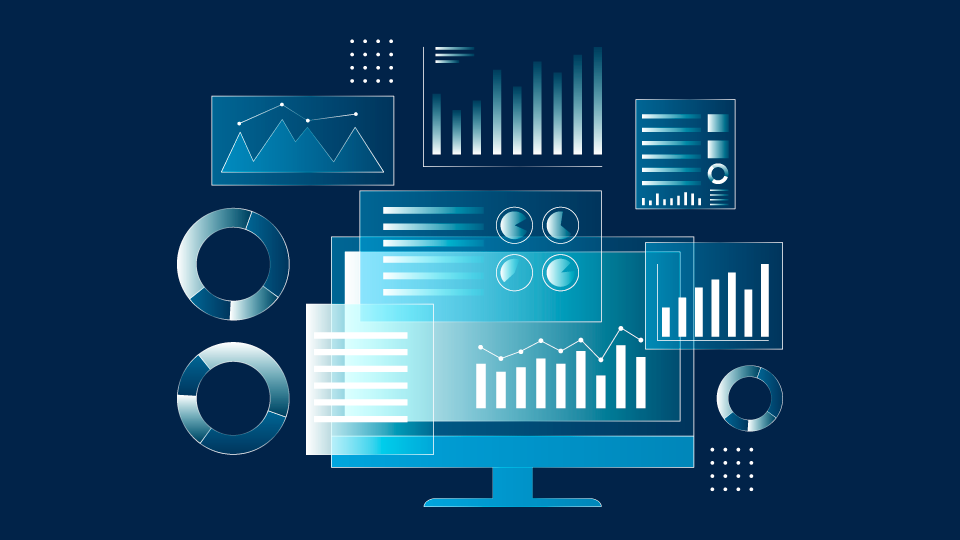
Digital analytics dashboard displaying charts, graphs, and performance metrics on a computer screen, representing business intelligence, predictive analytics, and data-driven decision-making.

AR Product Visualization in Mobile Apps: The Future of Online Shopping
Explore how AR product visualization is transforming e-commerce UX with immersive mobile shopping experiences, virtual try-ons, and interactive product previews.