
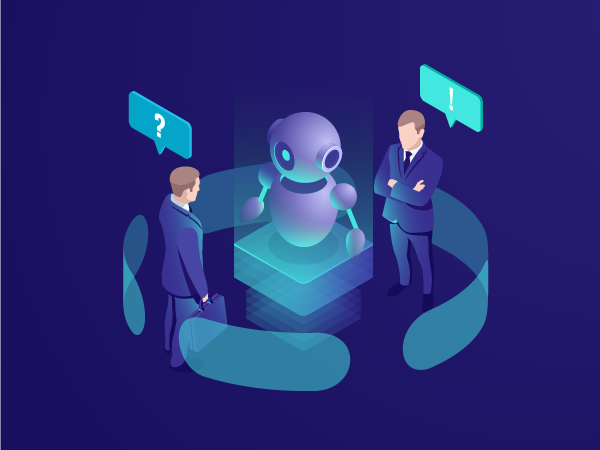
Introduction: Transforming Customer Experience with Machine Learning
Customers in the digital-first world of 2026 want their brands to know them and their needs immediately, know what they like, and serve them at a level of personal precision. They are no longer sensitive to generic marketing messages and slow services. Rather, they desire highly personalized, smart and smooth experiences in all interactions both online, mobile, and in-store.
Machine learning (ML) is one of the most influential branches of artificial intelligence (AI) that allows computers to improve autonomously and learn based on information. Unless it specifically mentions so, businesses are using ML to study behavior, understand intent, and customize every customer interaction point in its customer journey.
This paper discusses the importance of machine learning in improving customer experience (CX) by personalizing, predicting, and automating as well as ensuring ethical and data-driven customer interaction in the age of intelligent business.
The Role of Machine Learning in Customer Experience:
Machine learning can assist businesses to transition into the proactive customer engagement. Companies are able to predict behaviors and anticipate needs before the customers even request something rather than responding to what customers say or do.
Fundamentally, ML can recognize trends in huge data sets like history of purchases, browsing history, and log of interactions to predict or make recommendations accurately. These lessons can assist businesses to provide context-sensitive experiences that are effortless and natural.
ML algorithms can, in a particular instance, recommend items that a user is likely to purchase, identify dissatisfaction in a voice or text, or automatically respond to support replies in real-time. The outcome is a more seamless, intelligent, and more human experience that is driven by data.
Personalization at Scale: Turning Data into Human Connection
Personalization has developed much beyond including the name of a customer in an email. Machine learning supports real-time hyper-personalized experiences that are responsive to individual user preferences and behaviors in large scale.
AI-Driven Recommendations:
ML-powered recommendation engines have transformed business products or service suggestions. Such systems are used to predict what users will love next based on past behavior, demographic information, and contextual information by platforms such as Amazon, Spotify, and Netflix.
This works as well to enhance engagement and loyalty and the customers are not being sold to but they are being understood.
Smarter Marketing Campaigns:
Conventional marketing segments the audiences. Machine learning goes even further and does this at the level of creating segments of a single. The ML algorithms examine the open rates, browsing history, and time of engagement, and use them to dynamically customize messages.
As an example, when a user is a regular sportswear shopper, the algorithm will ensure that they get real-time deals on sportswear that they are interested in and the conversion rates increase.
Dynamic User Interfaces:
Machine learning has the capability to adjust digital interfaces in real-time. E-commerce websites have the ability to move the product categories or show the promotions depending on the behavior of the individual visitor. This implies that each user perceives a site or an application that is designed to suit their individual experience.
Personalization enables brands to build emotional relationships, making each contact with a customer feel special and important under the influence of ML.
Predicting Customer Behavior with Data Intelligence:
Predictive analytics is a machine learning-driven system that helps companies to predict customer behavior before it arises. Through pattern analysis and historic information, the business can detect opportunities, avoid problems as well as make evidence-based decisions promptly.
Reducing Customer Churn:
Churn prediction is one of the most useful ML services in CX. Customer-at-risk algorithms have the potential to identify at-risk customers by identifying early warning signs, which can include decreased engagement, increased response time, or negative feedback.
With this understanding, companies can make proactive moves, providing discounts or personalized attention to customers before it is too late.
Demand Forecasting:
It is possible to predict the sales trends, seasonal demand, and fluctuations in the market with great precision using machine learning models. This makes sure that the businesses have optimum inventory and that there is no shortage of products, and products are given at the time the customers need them the most.
Sentiment Analysis:
Using Natural Language Processing (NLP), ML systems are able to understand the emotions of customers in social media posts, reviews, or even in a chat. They recognize the tone, spot the dissatisfaction, and assist companies in responding both empathically and promptly.
Such insights help brands to make products better, educate the support team, and build relationships with the audience.
Predictive ML models transform data on the customers into foresight that gives a brand the ability to predict needs and respond accordingly.
Automating Customer Support with Machine Learning:
Customer service has been revolutionized by AI-powered automation by turning it into a problem-solving mode of customer support for an active service. Machine learning makes operations simpler, it lowers the response time, and improves the consistency in communication.
Smart Chatbots and Virtual Assistants:
Chatbots nowadays are not based on fixed scripts. They perceive intent, context, and even feeling using machine learning and NLP.
Bots such as ChatGPT, Alexa, and Google Assistants, which can be used as virtual assistants, have established a new benchmark of conversational artificial intelligence. Custom bots are used by businesses that:
- Give immediate responses to frequently asked questions.
- Troubleshooting users.
- Refreeze complicated problems to human agents where needed.
This combination model will provide speed and empathy in customer care.
Anticipated and Automated Routing of Tickets:
Machine learning is able to automatically categorize customer tickets based on urgency, topic or sentiment and direct them to the right team within seconds. This increases the time that is resolved, and high-priority cases are given priority to be addressed.
The proactive service that is predictive in maintenance:
ML models have been used in real-time monitoring of the performance of products in automotive and manufacturing industries to foresee and prevent failures. As an illustration, smart devices and appliances will be able to notify users of maintenance requirements, enhancing reliability and brand loyalty.
Automation not only boosts efficiency, but it also increases empathy by having the capability of responding promptly and intelligently to all customers.
Enhancing Customer Journeys with Real-Time Insights:
The current customer experience takes place across a series of channels, including web and mobile applications, chat, social media, and brick-and-mortar locations. Machine learning brings these touchpoints together as a single smart ecosystem, which helps brands to provide consistent, contextual experiences.
ML models are anticipated to respond to the cross-channel behavior in order to understand the location of the customer on their path and the next action that is most likely to be taken by the customer.
For example:
As an example, a consumer checking an online store may then see a customized advertisement of that product on social media later that day.
- It may happen when a mobile banking app provides a customized loan application in accordance with previous transactional information.
Connecting behavioral data between channels allows the business to make sure that each interaction, regardless of the location, feels like one continuation.
Responsible and Ethical AI in Customer Experience:
Ethical implications should be kept at the top, as machine learning is being more integrated into CX. Customer relationships are based on trust, and mismanagement of data will undermine the trust within a short time.
The concept of responsible AI is to be truthful about the use of data, not to be biased with algorithms, and to guarantee user privacy.
In order to develop trust and adhere to international rules:
- Get explicit customer permission for data collection.
- Fairness and accuracy: Audit ML models on a regular basis.
- Explain the decision-making process using explainable AI (XAI).
- Enforce powerful encryption and anonymization laws.
Compliance is not the end of ethical AI; an ethical AI helps to keep your brand intact and earn loyalty by being transparent.
Real-World Examples of ML-Driven Customer Experience:
Major brands have already shown the way in which ML can transform customer experience:
- Netflix uses ML to offer personalized recommendations to users on what to watch, maintaining high levels of engagement.
- Starbucks employs predictive analytics to suggest person-drink combinations in its mobile application.
- Sephora uses AI-based virtual try-ons to allow customers to envision the products and purchase them.
- Delta Airlines is a company that makes use of predictive models to enable it to rebook its passengers in advance who have been delayed in their flights.
These stories of success demonstrate that machine learning not only streamlines operations but also builds an emotional bond by making the experience of customers more seamless, quick, and personalized.
Creating a Machine Learning Strategy to achieve Excellent CX:
A strategic roadmap is needed in the organization that intends to maximize customer experience with machine learning:
- State your mission: Determine where ML can be applied: personalization, support, or retention.
- Gather quality data: Convert data between touchpoints and clean it to send to accurate models.
- Choose the appropriate tools: ML frameworks such as TensorFlow, PyTorch, or Google AI will give you flexibility.
- Integrate and automate: Link ML to CRM, marketing, and analytics systems.
- Measure and evolve: monitor model accuracy, customer feedback, and KPIs continuously to improve with time.
An effective ML approach to the matter is not merely about technology but rather about human insight and smart systems to produce valuable customer impact.
Conclusion: The Future of AI-Enhanced Customer Experience
The concept of connecting with customers is being redefined by machine learning. Hyper-personalized experiences to predictive service and intelligent automation. Hyper-personalization and predictive service: ML helps brands provide an experience that is effortless and intuitive.
In the future, 2026 and beyond, companies that use machine learning will not be distinguished by the volume of data they accumulate, but by the level of their intelligent use. The future is with organizations that merge data science with empathy, with the help of AI, not only to sell, but to serve.
Machine learning not only improves customer experience, but it also makes it a living, dynamic relationship between smart systems and humans.
Transforming CX with Machine Learning: Hyper-Personalization & Predictive Service
Learn how Machine Learning (ML) is redefining the 2026 customer experience. Move beyond generic service to hyper-personalization, driven by AI recommendations, dynamic interfaces, and real-time sentiment analysis. This guide explores ML’s role in predictive analytics (churn reduction, demand forecasting) and smart automation (advanced chatbots, automated routing). Discover the strategic roadmap to integrate ethical ML, ensuring your brand builds intuitive, seamless, and trusted customer relationships in the age of intelligent business.
Got time? Explore more!

API-First Development:Building Scalable Backend Systems for Growing Startups
API-First Development:Building Scalable Backend Systems for Growing Startups
Growth is the name of the game in today’s rapidly changing digital economy, and startups need applications that grow, are flexible, and are scalable.
Leveraging Predictive Analytics:Turning Customer Data Into Revenue Growth
Digital analytics dashboard displaying charts, graphs, and performance metrics on a computer screen, representing business intelligence, predictive analytics, and data-driven decision-making.

AR Product Visualization in Mobile Apps: The Future of Online Shopping
Explore how AR product visualization is transforming e-commerce UX with immersive mobile shopping experiences, virtual try-ons, and interactive product previews.