
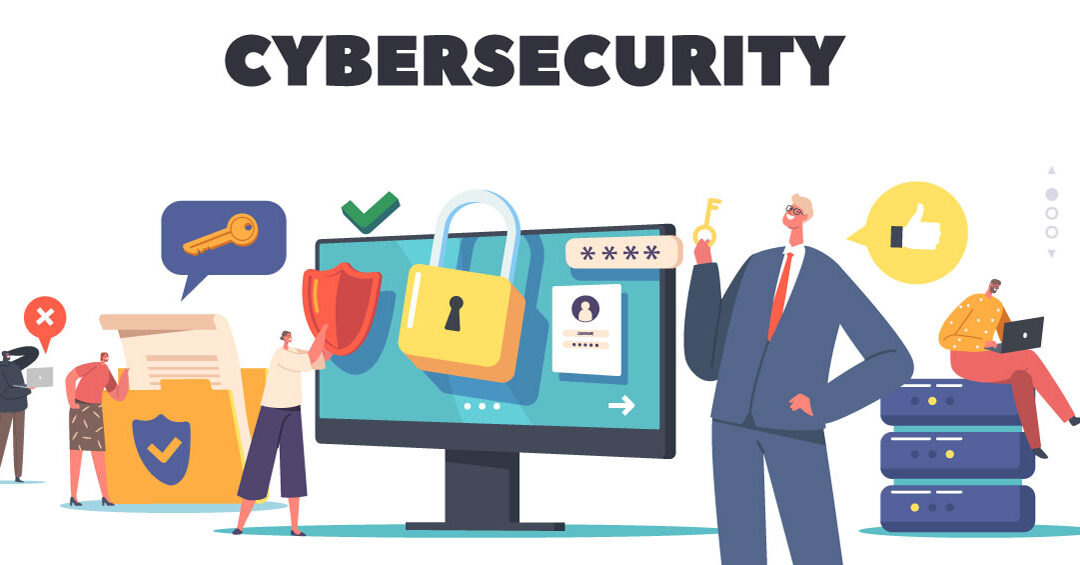
Introduction: The Rising Urgency of Cyber Defense:
Cybersecurity has ceased to be a technical issue and is now a business survival issue as we approach 2026. As the number of cyberattacks increases in frequency, complexity, and cost, there is no organization, large or small, that can afford to rest. Later reports worldwide indicate that the average data breach cost in 2025 would be over $5 million, and due to the development of AI-assisted hacking tools, the cost will be a lot higher in 2026.
To the present-day businesses, cybersecurity is not a luxury, but it is a necessity. Whether it is financial data, healthcare records, or intellectual property information, it is important to put in place strong security measures, which will safeguard the image of your company, finances, and even customers.
This paper is a list of cybersecurity measures required in 2026 to ensure every business has taken the necessary actions to ensure the safety of its data, networks, and infrastructure in the dynamic threat environment.
1. Establish a Zero Trust Security Framework:
Zero Trust has become the new standard of cybersecurity of an enterprise. In contrast to the traditional security of the perimeter, in which it is discussed that a user within the network can be trusted, Zero Trust is based on the never trust, always verify. All devices, users, and network requests are verified and authenticated before access, irrespective of the source. This will reduce the lateral movement in case there is a breach and keep the sensitive systems segregated.
Key actions:
- Install multi-factor authentication (MFA) in all systems. •
- Isolate sensitive data environments by using micro-segmentation. •
- Take a constant check on the logs of access to see abnormal activity. •
- Make use of the principle of least privilege (PoLP) to provide access only as much as needed by the users.
Zero Trust is not merely a system, but also an attitude that offers rigorous access control and constant validation of your whole digital ecosystem.
2. Implement Multi-Factor Authentication (MFA) Everywhere:
It is no longer possible to use passwords. One of the most effective, but also the simplest, methods of ensuring unauthorized access is multi-factor authentication (MFA). MFA uses two or more forms of verification (Something you know (a password), something you have (a device), or something you are (biometric). Although a hacker may steal a password with the help of phishing or brute-force attacks, MFA is an extra security barrier.
Best practices:
- Insist on MFA on every employee account, including administrative and remote.
- Apply adaptive authentication based on the device type, location, and risk level.
- Install MFA in VPNs, email systems, and cloud service providers.
Descartes reveals that the MFA is capable of preventing more than 99% of automated cyberattacks, and it is one of the simplest to succeed in the current security environment.
3. Encrypt Data In Transit and at Rest:
Encryption will ensure that even when hackers intercept sensitive data, they will fail to read it, as the messages are coded in such a way that only the appropriate key will make them understand what it is. In the years to come, 2026, remote work and cloud computing will grow, which means that data encryption is essential at all levels of the digital journey.
Action points:
- Encrypt stored data with AES-256 and encrypted data in transit with TLS 1.3.
- Use end-to-end encryption of emails and messaging services.
- Frequently change encryption keys and apply key management systems at a centralized location.
- Make certain of complete disk encryption of laptops and mobile devices used by the company.
Encryption creates trust on top of compliance – customers and partners are more confident that their data is secure at any moment.
4. Periodically Change and Upgrade systems:
Hackers tend to take advantage of the existing software vulnerabilities that have not been patched. Actually, there were numerous high-profile breaches, which arose due to the businesses’ neglecting to use available updates.
Automated patch management is essential in 2026 when the software layers are sophisticated and decentralized. Constant changes seal the security gaps before they are exploited by hackers.
Recommendations:
- Automate updates on OS and applications.
- Keep a list of assets of devices, applications, and IoT systems.
- Test important patches in a sandbox before installing the patches.
- Use a patch with an important vulnerability within 72 hours.
Uniformity is the first step in cyber hygiene; though patching might sound boring, it is among the best defenses against breaches.
5. Secure Cloud Infrastructure and APIs:
With cloud adoption still prevailing in the business IT department setting, data leakage has mostly been a result of misconfigurations. Improperly implemented storage buckets, unprotected APIs, and insufficient IAM (Identity and Access Management) protection can be used as a backdoor to attackers.
To achieve cloud ecosystem security:
- Cloud Security Posture Management (CSPM) tools can be used to detect misconfigurations.
- Encrypt and log all assets in the cloud.
- Use hard IAM roles and a conditional access policy.
- Periodically scan API endpoints and rate limit to avoid abuse.
- Install Kubernetes and Docker workload container security solutions.
Security in the cloud is collective- your provider secures the infrastructure, but it is up to you to protect data, configurations, and access.
6. Enhance Endpoint Security and Network Security:
Remote work and BYOD (Bring Your Own Device) have made the remote work model commonplace, which makes each laptop, phone, and tablet accessing company data a vulnerability.
Install an Endpoint Detection and Response (EDR) to track devices in order to detect suspicious activity. Combine this with Network Detection and Response (NDR) to get end-to-end visibility of your IT environment.
Key measures:
- Install some sophisticated antivirus and antimalware software.
- Use Intrusion detection systems (IDS) and firewalls.
- Implement the encryption of devices and automatic locking of screens.
- Divided corporate networks to restrict inter-departmental flow.
A secure network has a smaller attack surface, and potential threats are contained. F
7. Backup and Disaster Recovery Planning:
No system is completely invincible, even with the best defenses. That’s why a robust backup and disaster recovery plan is essential for business continuity.
Since ransomware attacks often target the backups themselves, it is extremely important to maintain multiple, isolated copies of critical data.
Checklist:
- Follow the 3-2-1 backup rule: 3 copies of data, 2 different storage media, 1 offsite copy.
- Test the recovery procedures regularly to ensure prompt restoration.
- Store one backup offline, air-gapped, to prevent ransomware encryption.
- Use immutable backups that cannot be changed or deleted.
Downtime can cost millions; regular testing enables quick and confident recovery when disaster does strike.
8. Conduct Employee Cyber Awareness Training:
Human error is still among the top causes of data breaches. Attackers continue to take advantage of phishing, social engineering, and weak passwords.
Regular cybersecurity awareness training will transform employees into your first line of defense. Educate staff on how to recognize phishing emails, good password practices, and incident reporting procedures.
Tips for Effective Training:
- Simulate phishing attacks to test employee vigilance.
- Update training modules with the latest trends quarterly.
- Encourage a “report-first” culture where employees should never fear reporting all potential incidents:
A well-informed workforce is just as important as firewalls or encryption: it’s the human shield protecting your digital assets.
9. Monitor, Detect, and Respond with Security Operations Centers (SOC):
By 2026, real-time threat detection will no longer be optional. Enterprises will adopt SIEM and SOC solutions that permit the effective monitoring of network activities to ensure quick reactions to deviations.
Modern SOCs depend on AI-driven analytics to pick out suspicious patterns before they escalate into full-scale attacks.
Core capabilities to include:
- Centralized logging of all system and application events.
- Automated Incident Response Workflows
- 24/7 monitoring with alerts for unauthorized access or unusual traffic spikes.
- Unified visibility via integration with EDR and NDR tools.
An active SOC converts cybersecurity from a reactive role to an active defense mechanism.
10. Comply with Regulations and Frameworks:
Regulatory compliance is both a legal requirement and a trust factor. Depending on your industry and geography, frameworks like GDPR, HIPAA, ISO 27001, SOC 2, and NIST define the standards for data protection.
Compliance with these regulations ensures reduced liability, enhanced transparency, and increased customer confidence. Perform regular audits for compliance and revise policies to reflect the latest legal requirements for 2026.
Conclusion: Build Resilience Before the Next Attack
One-time projects do not win battles in cybersecurity; it is a continuous process entailing assessment, improvement, and staying vigilant. Digital threats in 2026 will be faster, smarter, and more adaptive, enabled by AI and automation. But with the right protocols in place, your business can remain one step ahead.
By adopting Zero Trust, enforcing MFA, encrypting data, securing the cloud, training employees, and investing in proactive monitoring, you create not just a secure business-but a resilient one.
That is the clear message: don’t wait until it happens. Begin strengthening your cybersecurity foundation today and make 2026 the year your business becomes truly cyber resilient.
Is Your Business Ready for 2026? Strengthen Your Cyber Defenses Now
Discover the top cybersecurity protocols every business must implement before 2026 — from Zero Trust frameworks and multi-factor authentication to cloud security, data encryption, and employee training. Stay ahead of AI-powered cyber threats and build a resilient digital defense strategy for the future.
Got time? Explore more!

API-First Development:Building Scalable Backend Systems for Growing Startups
API-First Development:Building Scalable Backend Systems for Growing Startups
Growth is the name of the game in today’s rapidly changing digital economy, and startups need applications that grow, are flexible, and are scalable.
Leveraging Predictive Analytics:Turning Customer Data Into Revenue Growth
Digital analytics dashboard displaying charts, graphs, and performance metrics on a computer screen, representing business intelligence, predictive analytics, and data-driven decision-making.

AR Product Visualization in Mobile Apps: The Future of Online Shopping
Explore how AR product visualization is transforming e-commerce UX with immersive mobile shopping experiences, virtual try-ons, and interactive product previews.