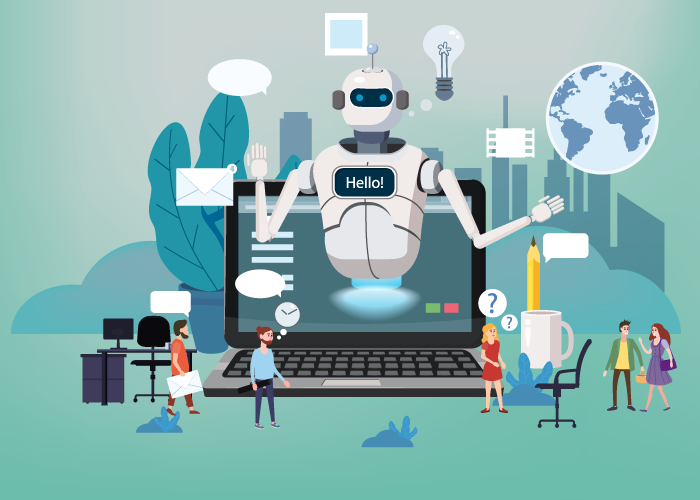
The development of generative AI has grown to be a fundamental aspect of software development in a very brief amount of time. One of the points where AI-assisted engineering will not be optional is 2026, which will be considered the basis of delivering in less time, achieving a higher level of quality, and making collaboration smarter. AI is being applied by developers worldwide to write code, identify bugs, test automatically, and even assist in making architectural decisions. Rather than substituting human inventiveness, AI is enhancing it, and software teams are creating overly dependable applications as never before.
The change is re-conceptualizing the software development life cycle (SDLC). Manual-intensive workflows that relieve manual effort are now complemented by AI models that are able to make suggestions in real-time, provide insightful information, and automate on every level. The outcome will be a new type of development environment where productivity is improved, the number of errors is reduced, and the teams will be able to pay more attention to innovation.
AI-Assisted Coding: From Autocomplete to Co-Development
Not too long ago, AI solutions could offer only basic autocomplete requests. These devices developed into completely interactive coding companions in 2026. Generative AI models are aware of programming logic, frameworks, and a real project. They are able to write full functions, create boilerplate skeleton and performance/security tune existing code. Developers would now start developing by stating intentions using natural language. The code is then written by the AI, and the developer reviews and amends, and instructs improvements. This joint venture accelerates implementation tremendously, particularly in repetitive or elaborate patterns. In the case of junior engineers, AI can be used as a guided learning tool that allows them to learn the best practices and minimize knowledge gaps. More to the point, AI can be used to ensure the consistency of large projects. It implies naming conventions, imposes patterns of architecture, and emphasizes non-conformity to the project standards. Rather than wasting time cleaning up the structure, developers can work on other aspects of the system and be able to resolve actual issues.
Automated Testing Becomes Intelligent and Predictive:
Testing is one of the SDLC phases that has always been time-consuming. Generative AI is changing this by automating the creation of tests and assisting the team in revealing the weaknesses earlier on. AI models are able to examine requirements and generate test cases to cover edge conditions and run them automatically in environments. This will be much more accurate, particularly in finding the weak points or performance bottlenecks. Predicting where bugs will occur before users see them, AI-driven tools detect bugs based on historical data on failure patterns and code by comparing these patterns. Maintenance testing is also faster.
Once a new update is applied to the codebase, AI is able to calculate which tests require rerunning to eliminate unneeded work. QA teams can peruse through prioritized results instead of sorting through thousands of test scripts, with root cause explanations. The end result is not only quality testing, but it is a smarter, more robust product.
Faster Debugging and Smarter Code Reviews:
The process of debugging has been said to be the most exhausting aspect of development. That burden is taken off in 2026 by AI tools. They recommend specific corrections based on the existing application logs, dependencies, and code history. Rather than having to manually trace lines of error, the developers are guided in reasoning and options for resolving errors. In a similar manner, real-time AI-promised feedback is added to the code reviews. The system brings out vulnerabilities in security, anti-patterns, and performance risks at an early stage, before the code is sent to the review stage. In the pull requests, the AI suggests ideas in context, why a code line is not working, how the code can be rewritten to run more efficiently, and should change should affect other modules. It minimizes the back-and-forth communication, shortens the review periods, and improves the quality of the code throughout the whole release process. The old senior engineers are now able to concentrate on the effects of strategic reviews and not syntax and formatting.
Collaboration Reinvented: Shared Intelligence Across Teams
Generative AI can boost teamwork by providing a knowledge-sharing platform that is open to all members of the team. Actionable insights can be summarized instantly in documentation, data models, architectural diagrams, and sprint histories. Team members can query the AI to get the correct knowledge about the project instead of spending time scrolling through long wiki pages or searching through old design files; thus, onboarding will become easier, and cross-functional collaboration will be much more convenient. The AI is considered a neutral communicator within distributed development setups. It assists in rewriting ambiguous requirements, documentation translation into other languages, and aligning the product objectives with the engineering decisions. Elements of miscommunication that could slow progress were previously detected and fixed automatically. Moreover, the developers in various time zones can leave the updates generated by AI to their colleagues, which means that the momentum will not be lost during the handoffs. The geographical limit, level of experience, and mode of communication do not restrict collaboration anymore — all people are equal in sharing the same level of intelligence.
Smarter Deployment and Continuous Improvement:
Continuous integration and delivery (CI/CD) pipelines are increasingly complex, and the use of AI introduces automation and accuracy to the deployment processes. It anticipates the operational risks, forecasts the deployment time, and suggests rollback plans in case a release can lead to instability. One more feature of generative AI is ongoing performance monitoring in case an application is already online. It identifies anomalies and proposes specific remedies through real-time analytics, which sometimes identify a problem even before a user realizes it. The system continues to enhance its monitoring intelligence by studying the behavior of the applications over time. This proactive mode makes the response quicker in case of an incident, enhances the uptime, and safeguards the trust of the users.
Empowering Creativity Instead of Replacing Humans:
One of the most widespread mistakes is that AI is supposed to substitute for developers. The reality in 2026 is the complete converse. Repetitive tasks and those that are error-prone are handled by AI to allow human talent to work on innovation. The developers use less time on boilerplate code, rewrite cycles, and manual research, and more time to create unique features, improve user experience, and address real-world problems. There is also experimentation in AI. Engineers are able to prototype fast, experiment with the architecture, and receive feedback in real time. Projects that used to be conceptualized over a period of months are now developed in the course of weeks. The process of development becomes more enjoyable, educational, and creatively satisfying.
Ethical and Security Considerations in AI-Driven Engineering:
Although generative AI helps to boost development, it also comes with new obligations. The teams have to attentively watch the usage of the sensitive data by models and make certain that the models follow the rules. Code generated by AI should be checked to eliminate potential undisclosed vulnerabilities or licensing issues. Man, control is necessary in all stages. To use it responsibly, there must be transparency; developers must know why the AI made some decisions, not to accept the answers blindly. To put it in brief, AI simplifies development, yet the professional judgment ensures its safety.
Conclusion: A Future Where Humans and AI Build Together
By the year 2026, AI will have completely transformed software development, implementation, and improvement. The development teams will work more quickly and with fewer mistakes, and the testing will be predictive, and the collaboration will run smoothly with common knowledge systems. The SDLC has grown smarter, automated, and user-friendly for the developer.
Software engineering is not about humans and machines, but the future of software engineering is about people with some power over machines. With generative AI, developers gain productivity and complexity reduction and are free to do what they best imagine, design, and create amazing digital experiences. Those firms that adopt such a change today will be the pioneers of the new era of innovation as they create a world where technology constantly changes with potential and not restrictions.
Building Smarter Software for an AI-Driven Future
We help businesses leverage modern technologies—like Generative AI—to build scalable, secure, and high-performance web and software solutions. From intelligent development workflows to custom applications, our team combines innovation with engineering excellence to deliver software that’s ready for what’s next.
Got time? Explore more!

API-First Development:Building Scalable Backend Systems for Growing Startups
API-First Development:Building Scalable Backend Systems for Growing Startups
Growth is the name of the game in today’s rapidly changing digital economy, and startups need applications that grow, are flexible, and are scalable.
Leveraging Predictive Analytics:Turning Customer Data Into Revenue Growth
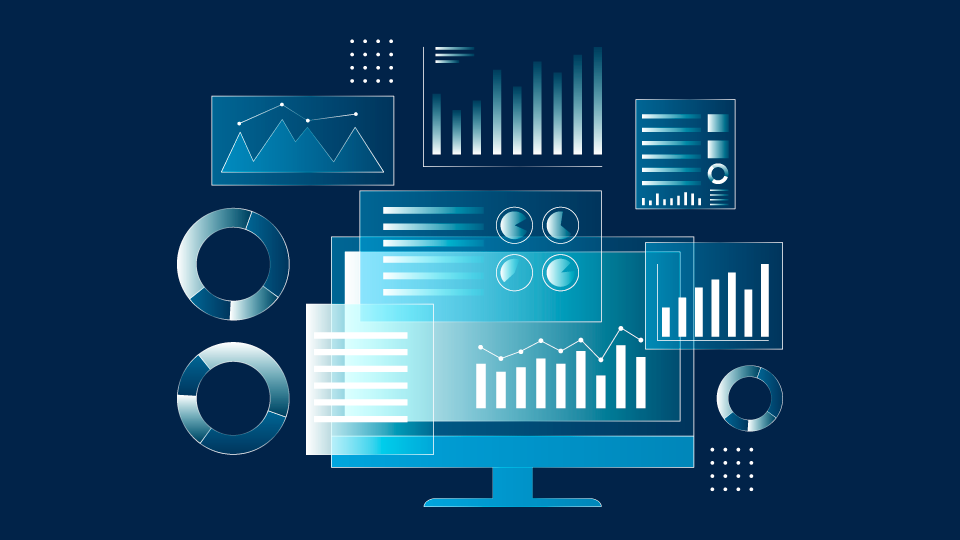
Digital analytics dashboard displaying charts, graphs, and performance metrics on a computer screen, representing business intelligence, predictive analytics, and data-driven decision-making.

AR Product Visualization in Mobile Apps: The Future of Online Shopping
Explore how AR product visualization is transforming e-commerce UX with immersive mobile shopping experiences, virtual try-ons, and interactive product previews.