
How tuned into your client’s needs and challenges are you? Although it may feel natural focusing on only the work they’ve hired you for, you’ve got more to offer.
Understanding your clients’ needs and being able to read between the lines are essential to satisfying stakeholder expectations and upholding nice, healthy relationships.
Although it might not be as simple as crossing things off a list, you can develop the ability to recognize the underlying issues and unmet requirements of your customers.
Let’s examine the various client wants in more detail, along with how you might address them.
What are client needs?
The term “client needs” refers to the material and immaterial requirements that a client has in order to realize the success of a project and to sustain a productive working relationship. At the onset of a project, these requirements might be explicitly expressed.
On the other hand, the client could not even acknowledge them as something they desire. Your team will frequently have to determine what your client needs before they even recognize it.
Examples of common customer needs:
While no two clients will have quite the same wants, you should anticipate encountering some of these typical ones frequently. When determining the best way to assist your next client, keep the following in mind:
Transparency: This is an additional method of communicating with the client in an open, transparent, and consistent manner. This could entail providing them with frequent updates, holding meetings to solicit comments, or creating current schedules so they are aware of when to expect your work.
Availability: Customers who have this need want to be able to contact your staff at any time. This could be keeping an eye on all emails and chats to ensure you never miss a message, or it could just entail assigning a dedicated client care representative to deal with them.
Control: While some clients might only want to be associated with the bare minimum, others could want to be involved at every level of the project. It can be crucial to accurately determine (and occasionally reevaluate) how much or how little control someone wants (or needs) over a project.
Trust: In the end, trust comes down to how much the client believes you can handle their issues. This is closely tied to control and transparency. Even if total confidence is what every client wants, it might not be achievable. It will be your responsibility to precisely determine their degree of trust before putting procedures in place that support relationship management and inspire confidence..
Measurable results: At this point, customers want to be able to visualize how resolving their main issues will affect them. Whether your project is qualitative or quantitative, your team will probably need to gather data at various points during the project to demonstrate the fruits of your labor.
Methods for understanding and satisfying the demands of your customers:
While it won’t hurt, having a strong sense of intuition isn’t always necessary to understand the difficulties and requirements of your clients. Alternatively, you can implement well-designed processes that will enable you to create exceptional customer experiences by utilizing some of the tactics listed below.
- Identify your main stakeholders and the roles they play
- Just as you wouldn’t embark on a trip without first consulting a map, you shouldn’t begin a project without first getting to know the people involved.
- Stakeholder mapping is the most appropriate term for this process. During this process, each stakeholder is identified, and you also specify things like how they relate to each other, what type of impact they will have on the project, and how the project’s outcome will affect them.
- As an example, you may categorize stakeholders based on whether they are external (i.e., not directly involved but affected) or internal (i.e., directly involved in day-to-day operations and decision-making). As an alternative, you might see how much you should interact with them by plotting them on an interest vs. influence matrix.
- This activity should help you gain a better knowledge of your clients and the variety of needs they have, regardless of how you decide to map your stakeholders.
- Ask insightful queries during the first discovery meeting.
The best way to find out what a client needs is to ask them, whenever feasible:
That’s exactly how a discovery session is meant to accomplish: it gives you a structured, all-inclusive method to analyze the demands of your customers, find out what they need for their projects, and determine their main objectives. By the conclusion of it, you ought to have a solid grasp of the needs of your customers as well as what it will take for them to succeed.
So, how are you supposed to approach all of this? Although there isn’t a set format for the ideal discovery session, you should usually keep it flexible to allow your customer to voice any concerns they may have. Assist them in this process by facilitating a warm-up to promote engagement and then by posing thoughtful questions that go past minor concerns to the base of their troubles.
After completing this procedure, you will possess the essential understanding required to begin formulating a strategy. This should cover how you’ll communicate, follow up, and attend to their multiple needs in addition to outlining how you’ll handle their main issue.
- Make an engagement plan to track and record the demands of your clients.
- It’s likely that once work starts, your client’s needs will change, regardless of how simple or complicated their project initially appears to be.
- There could be an emphasis on new issues.
- When metrics are received, the project’s scope may change.
- It’s even possible for new participants to enter and offer original concepts.
For all of these reasons, creating a document that lists and monitors your client’s different demands can be beneficial.
There are many advantages to carrying out this. This strategy document, for example, can be a great tool for your team because it provides a single location for them to check in on the client’s expectations, preferred method of engagement, and other important details. By demonstrating your diligence in giving your client exactly what they want, it can also inspire confidence and trust in them. Additionally, if you record shifting client priorities and demands, it can even assist you in anticipating future difficulties or wants.
Also, you’ll be ready to start drafting another blueprint as soon as you and your customer determine that it’s time to evaluate your plan.
Make frequent, casual check-ins to determine how satisfied customers are.
One of the simplest, yet most efficient, ways to make sure you’re satisfying consumer needs is through check-ins. You are not required to draft a lengthy document or call an all-hands meeting. All you have to do is find out how they are feeling.
Naturally, this does not preclude you from using them in inventive ways.
Including a visual element is one of our favorite ways to check in. For instance, you may ask participants to select a photo that best captures how they’re doing rather than merely asking a question.
On the other hand, ask them to make a mark on a sliding scale with a number on it from one to ten. This adds a statistical aspect that, if monitored over time, might enable you to measure client feedback and assess your efficiency.
In any case, it’s critical to carry out these check-ins frequently, ideally once each week. In this manner, you can make sure that you are keeping an eye on any difficulties before they become serious ones.
As much as possible, make the installation process painless.
It is worthwhile to give careful consideration to the most efficient way to deliver a new product or service. After all, clients won’t be satisfied with your services if you aren’t providing them with value during implementation, no matter how well you understand their needs or how frequently you check in with them.
Value stream mapping can help with this. Eliminating everything that doesn’t immediately improve the quality of the good or service you’re offering is the aim of this approach.
This waste can fall into many different categories, including time wasted on useless tasks or features, issues that demand more labor to fix, and procedures that aren’t necessary.
You’ll have the chance to examine each step of your implementation process in detail as you develop your value stream map, looking for waste and identifying areas for improvement.
You can improve the value flow toward your client by using this procedure, which will contribute to an even higher level of customer satisfaction.
Be more customer-centric:
One of the primary challenges that companies face when attempting to change their existing business model to one that is more customer-centric is cultural challenge. Employees at all organizational levels frequently need to make a major mindset and habit shift in order to make this change, especially in businesses that have historically been sales- or product-led.
Workers may be reluctant to adapt or uncertain about how to apply these new techniques successfully. Furthermore, a major problem is integrating consumer data across multiple departments. A customer-centric approach must result in a unified view of customer interactions and preferences, which can be challenging to achieve if data is dispersed or divided among many organizational departments. Because of this, the core of customer-centric technology is a CRM platform.
The key to a successful web application starts with truly understanding your client.
At DevRaulic, we don’t just build apps, we build partnerships. We work closely with you to uncover your vision, target audience, and goals. Together, we craft web applications that not only look great, but deliver real results.Got time? Explore more!

API-First Development:Building Scalable Backend Systems for Growing Startups
API-First Development:Building Scalable Backend Systems for Growing Startups
Growth is the name of the game in today’s rapidly changing digital economy, and startups need applications that grow, are flexible, and are scalable.
Leveraging Predictive Analytics:Turning Customer Data Into Revenue Growth
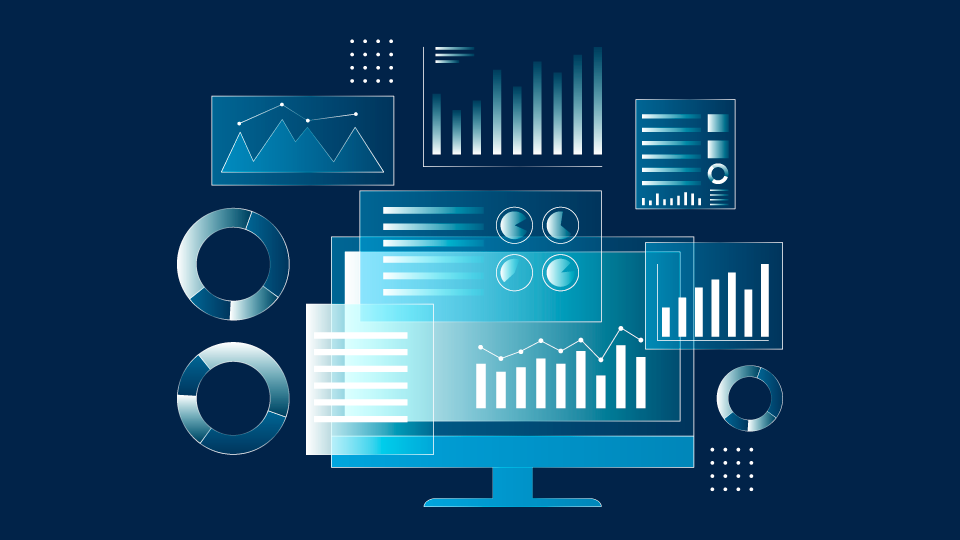
Digital analytics dashboard displaying charts, graphs, and performance metrics on a computer screen, representing business intelligence, predictive analytics, and data-driven decision-making.

AR Product Visualization in Mobile Apps: The Future of Online Shopping
Explore how AR product visualization is transforming e-commerce UX with immersive mobile shopping experiences, virtual try-ons, and interactive product previews.